


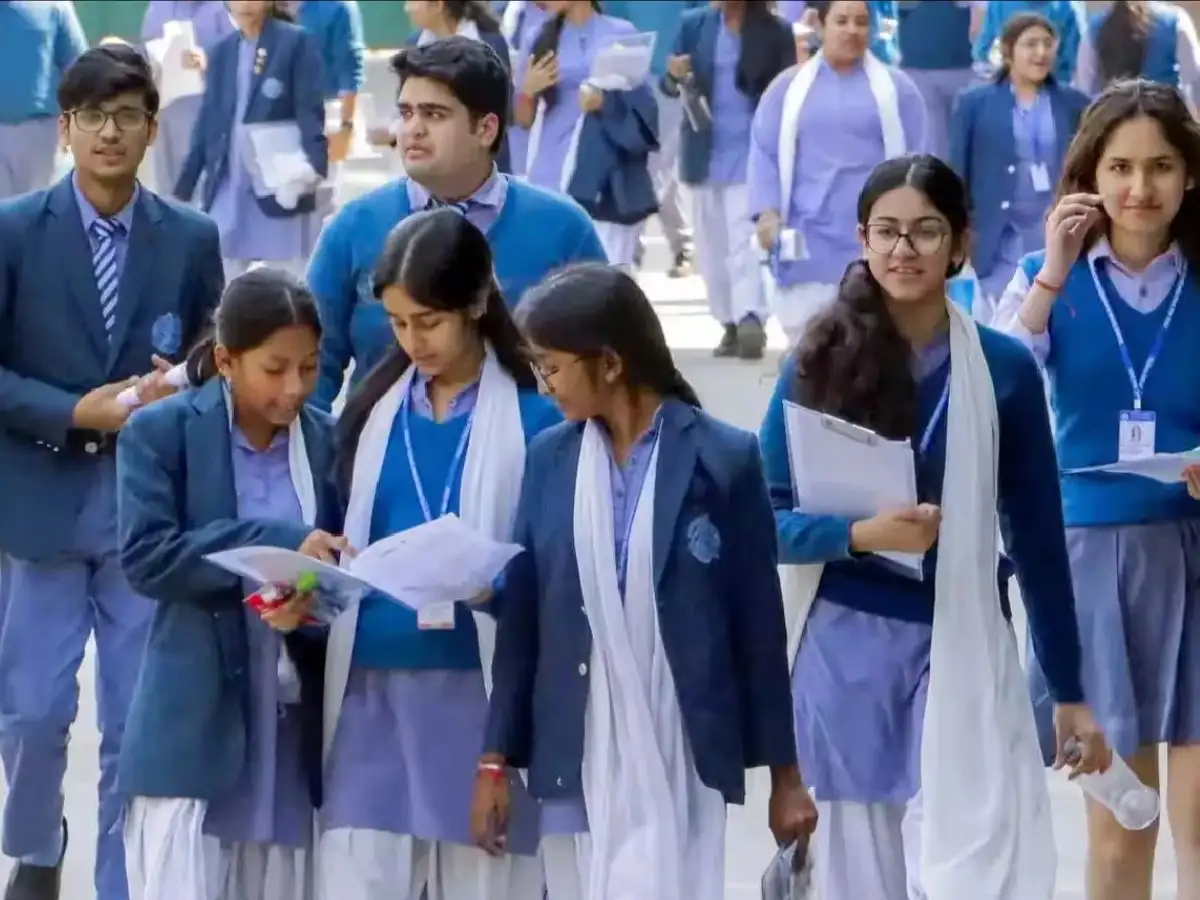
NEW DELHI, November 8, 2026 — The Central Board of Secondary Education (CBSE) has published the subject-wise marks bifurcation for the 2026–27 Class 10 and Class 12 examinations, giving schools, teachers and students a detailed view of how each paper will be assessed. The circular lists theory, practical, project and internal-assessment marks for individual subjects, along with examination duration and instructions about practical examiners and answer books. It is a subject-by-subject reference, not a single new formula that applies identically to every paper.
The distinction matters because students often hear a shorthand such as “80:20” and assume it covers the entire board. In the circular, many Class 10 subjects do follow an 80-mark theory and 20-mark internal-assessment split, but music, painting, home science, NCC and vocational subjects have different allocations. Class 12 varies even more: science subjects commonly combine 70 marks of theory with 30 practical marks, while several humanities and commerce subjects use theory with project assessment. The official subject code, rather than a broad stream label, is the safest way to identify the correct pattern.
The document is arranged in separate Class 10 and Class 12 tables. For each subject it identifies the code and name, the duration of the theory examination, the maximum marks allocated to theory, practical work, project assessment and internal assessment, whether an external practical examiner will be appointed, whether the Board will supply practical answer books, and the format of the theory answer book. That detail is useful to schools because marks for different assessment components are uploaded and processed through separate administrative steps.
For Class 10, Hindi Course-A, Urdu Course-A, Punjabi, Bengali, Tamil, Telugu and several other language subjects are listed with 80 marks for theory and 20 for internal assessment. Mathematics Standard also carries an 80:20 split in the table. Science and Social Science are shown with 80 theory marks and 20 internal-assessment marks. These examples should not be read as a universal rule: the same table lists Home Science with 70 theory and 30 practical marks, while Painting and several music subjects have a 30-mark theory paper, 50 practical marks and 20 internal-assessment marks. A number of vocational subjects use a 50:50 theory-practical allocation.
The Class 12 table has its own subject-specific structure. English Elective and Hindi Elective are shown with 80 marks for theory and 20 for internal assessment. History and Political Science allocate 20 marks to project assessment alongside an 80-mark theory paper. Geography, Physics, Chemistry and Biology use a 70-mark theory paper and 30 practical marks. Psychology also appears with a 70:30 theory-practical distribution, while subjects such as Business Studies and Accountancy use an 80-mark theory paper and 20 marks for project work. Music, dance and visual-arts subjects have their own practical-heavy combinations.
The circular also records whether an external examiner is to be appointed for practical or project assessment and whether the Board will supply practical answer books. Those entries are operational instructions, not suggestions for students to negotiate with a school. If a subject is marked as not requiring an external practical examiner, that does not mean the assessment component disappears; it means the school must follow the prescribed internal process. Students should ask the subject teacher how the school will conduct and record the relevant work.
CBSE’s subject-wise table is intended to reduce errors in the conduct of assessments and the uploading of marks. A mismatch between a subject code and the component-wise allocation can create avoidable problems when schools enter practical, project or internal-assessment scores. The circular therefore needs to be read as an administrative reference for both candidates and institutions. It does not, by itself, announce a change to the total maximum marks for every subject or replace the separate examination timetable.
The Indian Express reported that practical examinations, project assessments and internal assessments for winter-bound schools are scheduled from November 9 to December 19, 2026. For schools following the regular academic session, the corresponding window is January 1 to February 13, 2027. Schools should check the applicable CBSE circular and any later regional instructions before finalising local timetables, because winter-bound institutions follow a different academic calendar from most schools elsewhere in the country.
For students, the immediate step is to confirm the subject code printed on the school’s registration record or official subject list. A subject name can look similar to another paper while carrying a different code or assessment structure. Candidates taking an additional or skill subject should be particularly careful: a 50:50 practical split or a project component can change how much time should be reserved for the written paper. Students should not rely on a coaching-centre graphic or an old-year marks table if it does not identify the 2026–27 examination session.
Teachers and school examination coordinators should compare the circular against the subjects actually offered by the institution, the practical schedule and the school’s internal assessment records. The Board’s tables include answer-book details, which can affect how a paper is prepared and how a student organises an answer. Where an external examiner is required, the school must follow the applicable appointment and conduct instructions. Where the table says an external examiner is not required, the school must still preserve the evidence and records required for the assessment.
Parents should avoid interpreting a subject’s practical or internal-assessment marks as “easy marks” that can be ignored until the end of the year. Projects, practical files, laboratory work, presentations and periodic assessments may be spread across the academic session. A student who delays the work can find it difficult to complete it properly when the school begins uploading marks. The published distribution is a reminder to plan the full assessment, not only the three-hour theory paper.
Students who want to understand how verified academic identifiers and issuer-provided digital records work can use the following related guides alongside the CBSE circular.
Also read: APAAR ID: School Verification, DigiLocker, and Academic Records
Also read: DigiLocker for Students: How Academic Documents Work in India
A practical way to use the circular is to make a one-page subject checklist. Write down the subject code, theory duration, theory marks, practical or project marks, internal-assessment marks and the dates given by the school. Then compare the total with the subject’s 100-mark maximum. If the numbers do not add up, ask the school to check the code and the official annexure rather than trying to resolve the difference from a social-media post. This simple check is especially useful for students with optional subjects, skill papers or more than one language.
Students should also separate three different documents that are often discussed together. The subject-wise marks circular explains how marks are divided. The practical and internal-assessment schedule tells schools when those activities should take place. The theory date sheet identifies the dates on which written examinations are held. One document does not replace the others. A student who has checked only the date sheet may still be unaware of an earlier practical or project deadline set by the school.
The circular is not a promise that every school will conduct every assessment on the same day. Schools have to organise laboratories, teachers, external examiners where required and candidate groups. A school may issue a local timetable within the Board’s permitted window. Students should retain notices sent by their institution and raise a discrepancy early if a school schedule appears inconsistent with the applicable Board instructions.
There are also limits to what can be inferred from the marks distribution. The table does not reveal the difficulty of a paper, the questions that will appear, the marks a particular student will receive or the weight a teacher will place on a classroom activity beyond the prescribed allocation. It is not a prediction of pass percentages. Students should use it to understand the assessment structure and then prepare from the current syllabus, prescribed sample papers and subject-specific guidance issued by CBSE.
The practical message for the 2027 examination cycle is straightforward: verify the subject code, understand the split for that exact paper, complete internal work within the school’s schedule and use the official circular as the final reference when an online summary conflicts with it. The Board’s table provides the framework; schools implement the assessments, and candidates remain responsible for completing the work required in each component.
Frequently asked questions
Has CBSE introduced one common marks split for all Class 10 and 12 subjects in 2027?
No. The circular gives a subject-wise distribution. Many Class 10 subjects use 80 theory and 20 internal assessment, but practical, project, music, painting and vocational subjects have different splits. Class 12 also varies by subject.
When will CBSE practical and internal assessments take place for 2026–27?
The reported windows are November 9 to December 19, 2026 for winter-bound schools and January 1 to February 13, 2027 for regular-session schools. Students should follow their school timetable and the applicable CBSE circular.
Where can students check the correct marks distribution for a subject?
Students should use the official CBSE subject-wise marks bifurcation circular for the 2026–27 examination and match the subject code with their school records. Do not rely on an old-year table or an unofficial summary.
SOURCE
Central Board of Secondary Education;

Comments (0)
Be the first to comment. Comments are published after moderation.