


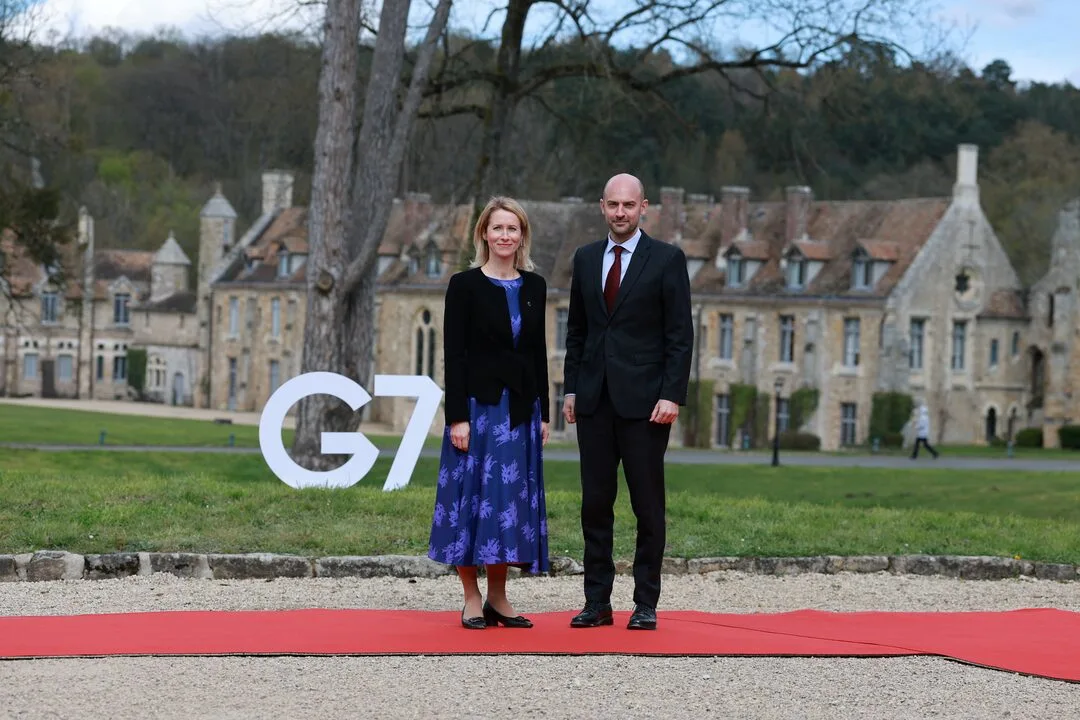
PARIS, November 9, 2026 — The G7 foreign ministers meeting opened in Paris on Monday for two days of talks as allies tried to assess whether the Republican losses in the United States midterm elections would change President Donald Trump’s approach to the wars involving Iran and Ukraine. The meeting brings Secretary of State Marco Rubio before the other G7 ministers at a moment when Washington’s foreign policy is under renewed scrutiny and European governments are concerned about the consequences of further escalation in the Middle East.
The discussions are also taking place immediately before a new round of trilateral talks on Ukraine scheduled for Tuesday in Abu Dhabi. Diplomats say the G7 wants to sustain pressure on Russia, coordinate support for Kyiv and avoid allowing differences over Iran, trade and security to weaken cooperation among the group’s members.
The G7 brings together the United States, Britain, Canada, France, Germany, Italy and Japan, with the European Union also represented. The Paris meeting is a foreign-ministers’ session rather than a leaders’ summit, but it provides an important forum for comparing positions before decisions are taken in capitals. Ukraine, Saudi Arabia, Egypt, South Korea and Brazil are also participating in parts of the discussions, according to officials.
Four G7 diplomats told Reuters that Democratic gains in the US midterm elections could narrow the White House’s room for manoeuvre. They cautioned, however, that the result should not be interpreted as a return to the multilateral approach that characterised earlier administrations. Foreign policy decisions remain under Trump’s control, and allies still have to work with the administration that is in office.
For Rubio, the meeting is his first appearance before G7 counterparts since the elections. He is expected to explain Washington’s position on Iran and Ukraine while listening to concerns from governments that have been wary of the administration’s military and diplomatic choices. The discussions are taking place against a wider backdrop of political uncertainty in the United States, but the ministers’ immediate task is to manage conflicts that are already affecting security, energy markets and European defence planning.
The meeting was moved from Marseille to Paris at short notice for security reasons after weeks of protests in France. The change of venue adds a domestic-security dimension to a ministerial agenda that already includes cyber threats, political interference and the protection of critical infrastructure.
Iran is expected to be one of the most difficult subjects. Washington’s allies have repeatedly expressed scepticism about the war and have warned that additional US military action could deepen the crisis rather than produce a durable settlement. The concern is not limited to the immediate military balance. A prolonged conflict could disrupt shipping, raise energy costs and increase the risk of further instability across the Gulf.
Speaking before travelling to Paris, Rubio said he would not describe the negotiations as being close to a breakthrough. He argued that Iranian demands remained unacceptable and said the administration would continue to pursue its objectives. His remarks underscored the gap between Washington’s public position and the caution expressed by some European partners, who want a diplomatic route that reduces the risk of a wider regional conflict.
The G7 ministers are likely to consider the effect of the conflict on maritime routes and energy security. Shipping through the Strait of Hormuz is particularly important because a large share of global oil and liquefied natural gas exports passes through the Gulf. Even without a complete closure, threats to vessels, higher insurance costs and delays can affect energy prices and freight markets. The Red Sea remains another vulnerable corridor, linking trade between Asia and Europe.
The ministers also have to consider how the war affects regional diplomacy. Gulf governments have their own security concerns and economic interests, while European countries are reluctant to endorse actions that could widen the conflict. The group’s ability to issue a common position will depend on whether its members can agree on the objectives of negotiations, the role of sanctions and the conditions under which military pressure should give way to diplomacy.
Ukraine is another central item because the Paris meeting precedes trilateral discussions on Tuesday in Abu Dhabi involving Ukraine, Russia and the United States. French Foreign Minister Jean-Noël Barrot said officials from France, Britain, Germany, NATO and the European Commission would also be present in the Emirati capital. The European participants are seeking to ensure that any discussion of security arrangements does not leave the continent’s governments outside decisions that will directly affect them.
The battlefield picture remains difficult. G7 diplomats told Reuters that the front line had largely stabilised, making a rapid military breakthrough unlikely. They said Russia had shifted its focus towards systematically attacking energy infrastructure, raising the prospect of a nationwide winter blackout. Ukraine’s urgent military needs include additional Patriot interceptors and other air-defence systems, which are in limited supply.
The G7 is expected to discuss ways to maintain pressure on Moscow while mobilising further military, financial and energy support for Kyiv. The timing matters because winter raises the consequences of damage to power stations, transmission lines and heating systems. A sustained campaign against energy infrastructure can affect civilians far from the front and increase the costs of maintaining essential services.
European coordination is not guaranteed. Italian Prime Minister Giorgia Meloni warned on November 5 that Europe risked becoming irrelevant in efforts to end the war if individual governments continued pursuing separate diplomatic tracks instead of agreeing on a common representative and strategy. That debate is likely to be reflected in the G7 discussions, particularly as European officials prepare to attend the Abu Dhabi talks.
Also read: Rubio Says Iran Talks Are Far From Breakthrough as Trump Prepares to Meet Qatar PM.
The immediate question is whether the United States, European governments and Ukraine can define common principles for a settlement before negotiations move into more detailed questions about territory, ceasefire monitoring and long-term security guarantees. The Paris meeting cannot resolve those issues, but it can help establish whether the allies are approaching the next round of diplomacy with a shared understanding.
The agenda extends beyond the two wars. Italy’s foreign minister, Antonio Tajani, said discussions would include hybrid threats after personal data about him was published on the dark web by hackers he described as pro-Russian. European countries have also reported flight-disruption hoaxes, cyberattacks affecting supermarkets and attempts to exploit the unrest surrounding protests in France.
These incidents differ in scale and attribution, but they raise common questions about how governments protect public services and respond when digital operations are used to create disruption or undermine trust. Ministers are expected to discuss cyber resilience, information operations and the security of transport and logistics networks. The meeting also follows the launch of a G7 Ports Network, designed to improve cooperation on maritime security and the protection of supply chains.
The French agenda includes wider regional issues, including Sudan and the Horn of Africa, developments in Latin America and the Caribbean, the Indo-Pacific and the security of maritime routes. Food security, humanitarian supply chains and the role of artificial intelligence in security are also part of the broader programme. A separate donor conference on the Chernobyl containment structure is scheduled in Paris with the European Bank for Reconstruction and Development and Ukraine, reflecting concern about the long-term safety of damaged nuclear infrastructure.
The invited partners show that the G7 wants to hear from governments outside its membership, although participation does not mean that every country will endorse the same conclusions. Saudi Arabia and Egypt have direct interests in Middle Eastern security; South Korea and Brazil bring perspectives on Asia and the wider global economy; Ukraine is central to the European security discussion. The group’s challenge is to translate those conversations into practical coordination without overstating the degree of agreement.
A foreign-ministers’ meeting is not expected to produce a comprehensive settlement for Iran or Ukraine. Its value lies in aligning positions, identifying areas where allies can act together and clarifying where differences remain. The absence of a single agreed approach on every conflict does not make the discussions irrelevant, but it limits how far the group can move beyond common statements and practical cooperation.
For European governments, the central concern is that US decisions on Iran and Ukraine could have consequences well beyond the immediate theatres of conflict. Energy costs, defence supplies, migration pressures and the credibility of security guarantees are all affected by the choices made in Washington and by the responses of Russia and Iran. The midterm result may influence domestic political calculations, but it does not remove those strategic risks.
The next test will come in Abu Dhabi, where the participants will have to decide whether the latest diplomatic contacts can produce a framework that Ukraine can accept and that Russia is prepared to discuss. On Iran, the G7 will be watching whether the parties can return to meaningful negotiations and whether military escalation can be avoided. On cyber and maritime security, the ministers will need to show that cooperation can protect infrastructure rather than simply describe the threat.

Comments (0)
Be the first to comment. Comments are published after moderation.