


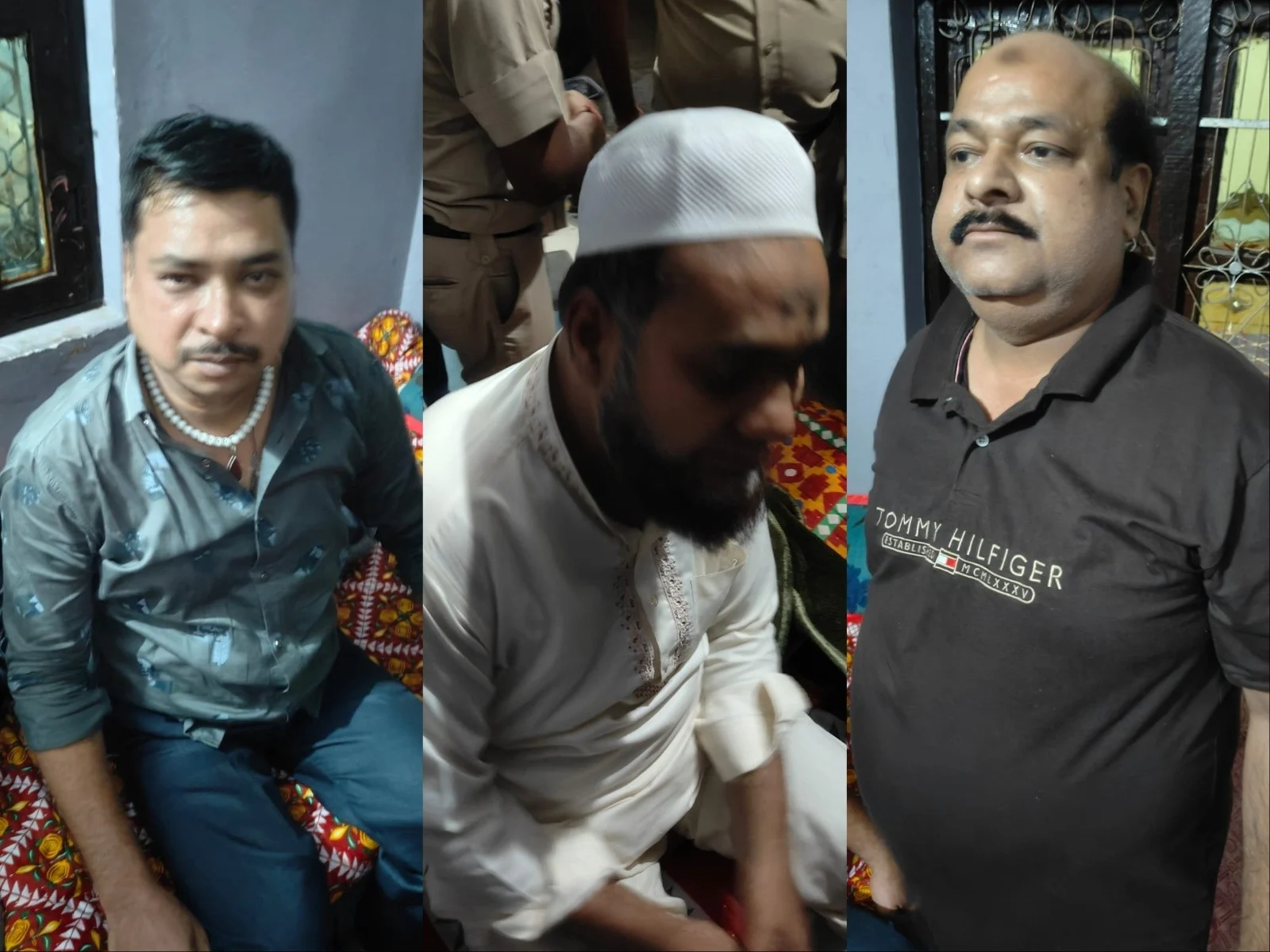
NEW DELHI, November 6, 2026 — Delhi Police have arrested three contractors after the Chawri Bazar building collapse in Old Delhi killed two labourers and injured two others. The arrests came a day after the three-storey structure fell in a congested lane near the Chawri Bazar Metro station, bringing renewed scrutiny to the way construction work is monitored in the capital’s older neighbourhoods.
The accused, identified by police as Siraj, Tajuddin and Furkan, were arrested in Sirohi village in Faridabad, according to reports citing Delhi Police. They have been booked under Section 105 of the Bharatiya Nyaya Sanhita, which concerns culpable homicide not amounting to murder. The registration of a case and the arrests are investigative steps; they do not establish guilt. The accused will have an opportunity to contest the allegations through the criminal process.
The building collapsed at about 9.48 am on Thursday, November 5, in the Gali Sheesh Mahal–Gali Sitara area of Chawri Bazar. Rescue teams from the Delhi Police, National Disaster Response Force, Delhi Fire Services and Municipal Corporation of Delhi worked at the site to search the debris and remove those trapped. Four people were pulled out, according to reports citing officials. Two labourers, identified as Kishori, 40, and Sanjeet, 45, later died. The two other people rescued, Sahdev Chaudhary, 25, and Firoz, 37, were reported to be stable and out of danger.
The immediate police investigation is focused on the work being carried out at the property, the people responsible for it and whether required permissions and safety precautions were in place. Delhi Chief Minister Rekha Gupta ordered action against the civic engineers concerned, while the municipal body said it had suspended a junior engineer and an assistant engineer. The government has also called for an inquiry into the collapse. Those administrative steps are separate from the criminal case and do not, by themselves, settle the question of who knew what about the construction before the building fell.
One of the most consequential details to emerge after the collapse concerns a communication sent by Delhi Police to the MCD more than five months earlier. Hindustan Times reported that records reviewed by the newspaper showed police had written to the civic body on June 15, flagging unauthorised construction at the property and asking the corporation to take action. The timing raises questions about what inspection followed, what was recorded and whether any enforcement step was considered sufficient.
The MCD’s account, as reported by the same newspaper, is that it inspected the property after receiving the police communication and found work that appeared to be repairs. The civic body has alleged that the owner later undertook fresh construction. That explanation is important, but it does not resolve the central issue: whether the nature and scale of the work changed after the inspection and whether the authorities returned to check. The police communication and the MCD’s description of its inspection need to be examined alongside the building file, inspection notes, photographs and any notices served on the owner.
Preliminary municipal findings reported after the collapse indicated that the work may have extended beyond ordinary repairs and that a sanctioned building plan was not available for the structure. Those findings should be treated as preliminary until the inquiry publishes its conclusions. A definitive account will need to establish which parts of the building were altered, who authorised the work, whether structural changes were made and whether the property’s condition was assessed before labourers were allowed to work inside or around it.
The distinction between repairs and structural construction is not a technicality. Repair work may still require permissions or safety precautions depending on its nature, while additional floors, changes to load-bearing components or major alterations raise separate regulatory and engineering questions. Investigators will need to identify the actual work being performed rather than rely only on how it was described by the owner, contractors or officials.
The three arrests broaden the investigation from the condition of the building to the chain of responsibility for the project. Police have not publicly established through a court finding who directed the work or what each contractor’s precise role was. The investigation should clarify who hired the labourers, who supervised the site, whether a structural engineer was engaged and whether any written plans or safety assessments existed. These are questions for investigators and the inquiry, not conclusions that can be drawn from the arrests alone.
Chawri Bazar is part of a dense historic district where residential, commercial and workshop uses often sit close together. Narrow lanes and closely spaced buildings can make emergency access difficult when a structure fails. The rescue operation involved several agencies, but the larger public-safety issue begins well before emergency teams are called: a building must be inspected, unsafe work identified and enforcement action taken before workers and neighbours are exposed to avoidable risks.
Construction safety is not limited to the final condition of a building. Workers can be exposed to danger during demolition, excavation, removal of walls, addition of floors and the movement of materials. If the structure is altered without a competent assessment, the risk may be concentrated on the people carrying out the work, including labourers who may have little control over the decisions made by property owners or contractors. The two deaths in Chawri Bazar underline the human cost of failures in supervision, although the inquiry must determine exactly how the collapse occurred.
For residents and businesses in the area, the incident also creates uncertainty about adjoining properties and access to the affected lane. Authorities may need to inspect nearby structures, restrict entry where necessary and communicate clearly about any temporary safety measures. Such steps should be based on engineering assessments rather than assumptions that every neighbouring building is unsafe—or that buildings outside the immediate collapse zone require no review.
The MCD’s role is central because municipal authorities are responsible for building-plan approvals, inspections and enforcement within their jurisdiction. The police communication reported to have been sent in June makes the paper trail particularly important. An inquiry should establish when the complaint was received, which officer inspected the site, what was observed, whether a written report was filed, what directions followed and whether any later complaint or change in construction was recorded. If the inspection was limited to visible repairs, the inquiry should explain why that was considered adequate and whether a follow-up visit was required.
The government’s decision to suspend two engineers signals that the department is examining possible lapses, but suspension is not a finding of misconduct. A fair inquiry must give the officials concerned an opportunity to respond and examine the records available to them at the time. It must also assess the responsibility of the property owner, contractors and any other professionals involved. Focusing only on the officials who signed or handled a file would leave the chain of decisions incomplete if the work was directed or carried out by private parties.
Criminal accountability and administrative accountability will proceed on different tracks. The police case will examine whether the evidence supports charges under the BNS provision invoked. The municipal and government inquiries should examine compliance with building rules, the adequacy of inspections and whether the enforcement system failed to act on warnings. The outcome of one process may inform the other, but neither should be treated as a substitute for the other.
For workers, the case also raises questions about site-level protections. Investigators will need to determine whether the labourers were given safe access, whether the structure was stable before work began and whether the people supervising the site understood the risks. The available reports do not establish the workers’ employment arrangements, the safety equipment provided or whether any formal safety assessment was carried out. Those details should be confirmed before stronger conclusions are drawn.
The next developments to watch are the contractors’ formal arrest and remand proceedings, the police account of the alleged roles of each accused, the findings of the municipal inquiry and the status of the suspended engineers. The authorities should also clarify whether the owner or other persons connected with the property are being questioned and whether additional inspections have been ordered in the surrounding area.
The June 15 police communication makes the collapse more than a question of what happened at 9.48 am on Thursday. It places attention on the months beforehand: the warning, the inspection, the description of the work and the decisions that followed. The deaths of two labourers demand an investigation that is both prompt and specific. Its findings should show not only how the building failed, but whether an earlier intervention could have prevented the loss of life.

Comments (0)
Be the first to comment. Comments are published after moderation.