


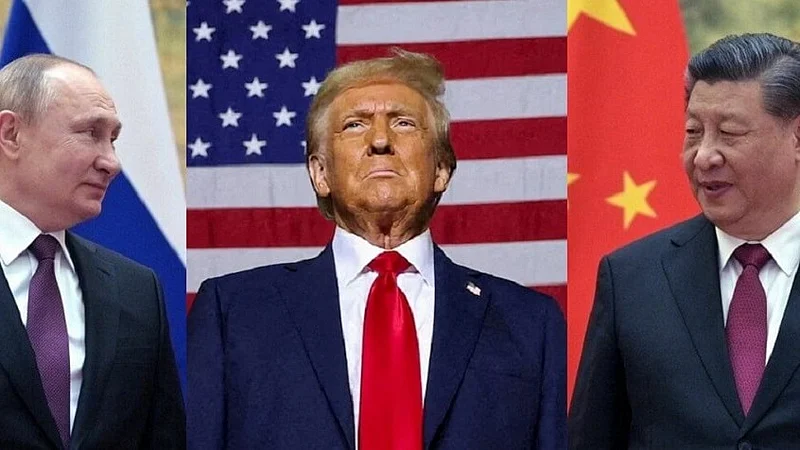
China has confirmed that discussions are under way about a possible meeting between President Xi Jinping, US President Donald Trump and Russian President Vladimir Putin on the sidelines of this month’s Asia-Pacific Economic Cooperation summit in Shenzhen. Beijing has not announced a final agreement, and the gathering remains a possibility rather than a confirmed event.
Chinese Foreign Ministry spokesperson Mao Ning said China was in communication with the relevant parties regarding a meeting between the three heads of state. The confirmation adds a new diplomatic dimension to the upcoming regional summit, but officials have not set out a date, agenda or agreed outcome for a trilateral meeting.
The key development is that China has acknowledged contacts over a possible gathering. It has not said that all three governments have accepted an invitation or that the leaders will meet. The distinction matters: diplomatic consultations can continue without producing a finalized meeting.
The potential venue is the APEC summit in Shenzhen, where Xi is expected to host international leaders. A trilateral appearance by the Chinese, American and Russian presidents would be unusual and would attract attention because of the three countries’ different priorities on trade, security and the war in Ukraine.
Trump is also expected to hold a bilateral meeting with Xi as the two governments seek to manage a fragile trade truce due to expire in January. US officials have pressed China to fulfil commitments involving agricultural purchases and critical minerals, while Beijing has raised concerns about American trade restrictions.
That bilateral relationship could shape the atmosphere around any wider meeting. A leaders’ gathering may provide a high-profile setting for dialogue, but it would not automatically resolve differences over tariffs, technology controls, market access or supply chains.
The three governments would approach the meeting with different objectives. Trump has expressed interest in nuclear arms control. Putin is expected to want discussions focused on Ukraine, while China has been cautious about being drawn into disputes involving the war or wider security issues.
Any format that discusses Ukraine without Kyiv at the table would also face questions about whether it could contribute to a durable settlement. A meeting among major powers might create diplomatic visibility, but decisions affecting Ukraine’s sovereignty and security cannot be treated as settled by a conversation among outside leaders.
Analysts cited by The Associated Press have cautioned that the leaders’ interests do not neatly align. China may value the image of convening the three powers, while Russia could see a joint appearance as a source of diplomatic legitimacy. The United States, meanwhile, would have to balance its trade agenda with security concerns.
A photograph or joint appearance would be politically significant, but it should not be mistaken for a negotiated agreement. The substance would depend on whether the leaders agree to concrete follow-up, address points of conflict and allow relevant parties to participate in discussions affecting them.
The next indicators will be official confirmation from the three governments, the level of representation, and whether a formal agenda is released. Until then, the proposed Xi-Trump-Putin gathering remains under discussion. The APEC summit could provide an opportunity for high-level diplomacy, but expectations should remain measured.




Comments (0)
Be the first to comment. Comments are published after moderation.