


Paris, November 5: A wave of bomb threats targeting commercial passenger flights across Europe triggered diversions, military escorts and security inspections on Thursday, with more than a dozen aircraft affected in incidents reported in France, Italy, Bulgaria, Austria and the Czech Republic. All passengers and crew members were reported safe, and checks on several aircraft found no explosives or suspicious material.
British Transport Secretary Heidi Alexander described the threats as “malicious hoaxes”, according to the Associated Press. European aviation authorities and national security services were investigating the incidents, while the European Commission said an aviation-security information-sharing mechanism had been activated. Officials had not established whether the threats were coordinated or whether they were connected to a cyber operation.
The incidents affected flights operated by Aer Lingus, Ryanair, Finnair, LOT Polish Airlines, Wizz Air and Aegean Airlines. Some aircraft continued to their planned destinations after checks, while others were diverted to alternate airports. The repeated alerts placed pressure on airline operations and airport security teams at a time when European governments were already monitoring a range of hybrid-security risks.
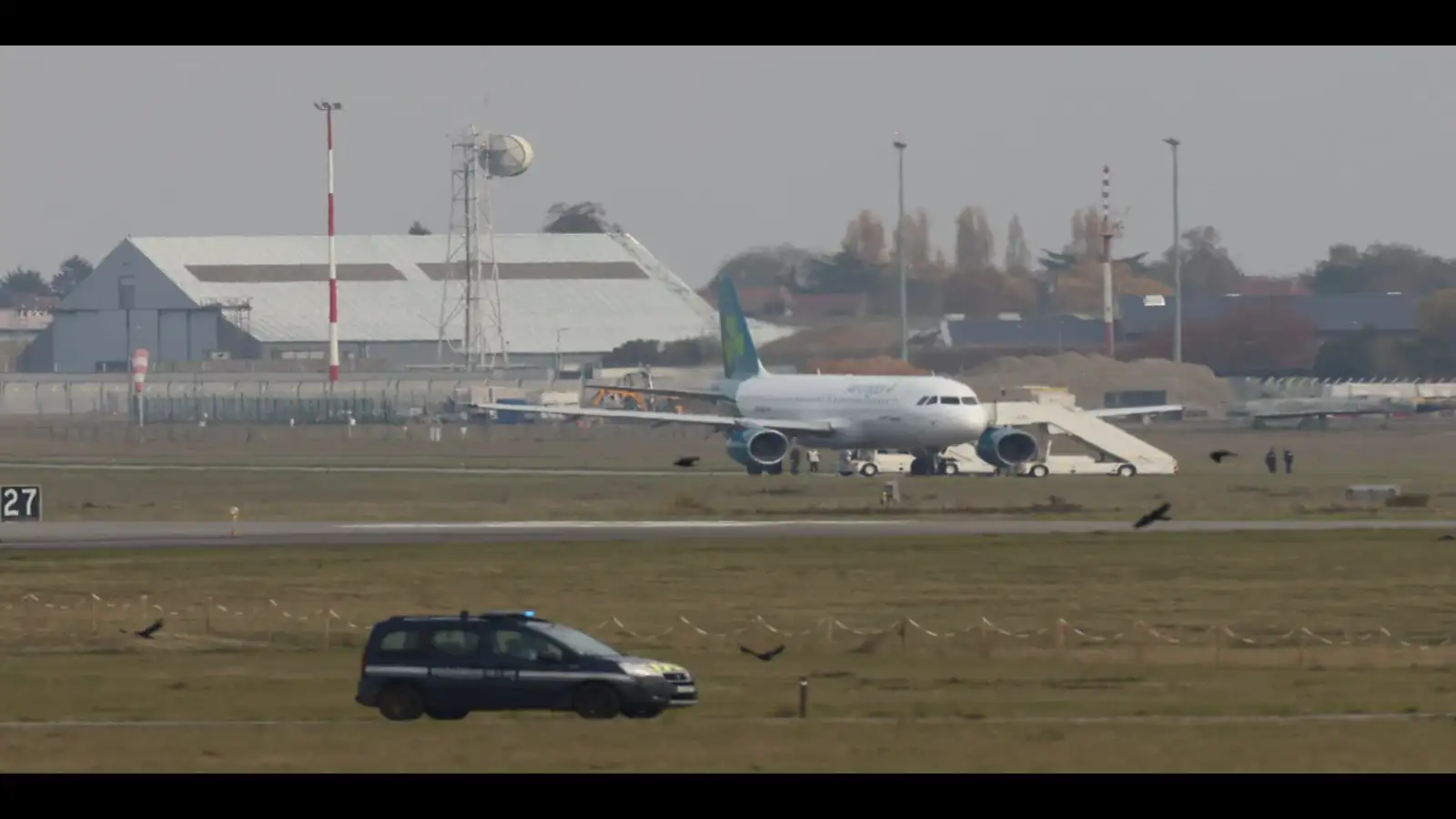
One of the most closely watched incidents involved an Aer Lingus service travelling from Dublin to Rome. The aircraft diverted to the French military air base at Évreux after a bomb threat. A French fighter jet escorted the plane, and the passengers and crew were able to disembark safely. The diversion was described by the airline as a security precaution.
Three Ryanair flights travelling towards Sofia from Madrid, Copenhagen and London also received threats. The flights from Madrid and Copenhagen continued to Sofia, while the London service was diverted to Plovdiv in Bulgaria. The Bulgarian transport ministry said the required inspections were carried out after landing and no issues were identified. Passengers on the diverted service were to be transported onward to Sofia.
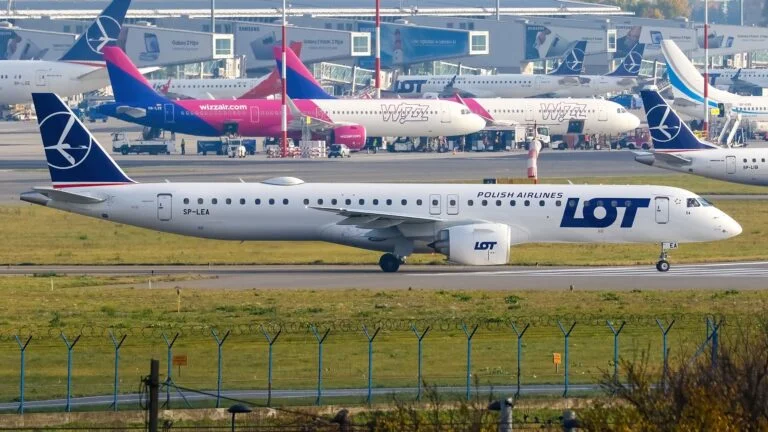
Finnair reported threats involving services from Helsinki to Rome and Helsinki to Vienna. Both aircraft landed safely. A Wizz Air flight from Milan to Warsaw was diverted to Vienna, while another Wizz Air service bound for Bucharest was checked after a threat was reported. LOT Polish Airlines and Aegean Airlines flights were also among the services affected, alongside aircraft operating to and from Prague.
The Guardian’s running tally reached 15 affected flights during the day, drawing on airline statements and updates from national authorities. That figure should be understood as a live count of reported threats at the time of its update, rather than a final official total. The number could change as investigators reconcile reports and determine whether separate alerts concerned the same aircraft or incident.
Authorities in several locations said initial inspections did not identify explosives or suspicious items. Those findings are important, but they do not end the investigations. Security teams must establish how the threats were communicated, whether the information was credible enough to require emergency action and whether any common source or pattern links the incidents.
Airlines and airport operators are required to treat a credible bomb warning as a safety issue until the relevant authorities complete an assessment. That can mean changing a flight path, diverting to an airport with suitable emergency facilities, holding an aircraft away from other operations or arranging a controlled inspection after landing. The procedures are designed to protect passengers and staff, even when a warning later proves to be false.
A diversion can affect more than the passengers on one aircraft. It may require an airport to allocate a stand, bring specialist police or bomb-disposal personnel to the site, move other aircraft and coordinate with the airline’s operations centre. Passengers may miss connecting flights, crew duty limits can be affected and aircraft may be out of service while inspections are completed. A sequence of threats across several countries can therefore create a wider operational burden even when no device is found.
Military escorts and landings at military facilities are exceptional measures, but they can be used when authorities consider them appropriate to the circumstances. In the Aer Lingus incident, the diversion to Évreux allowed French authorities to manage the aircraft and its occupants away from a busy civilian terminal while the threat was assessed. The decision should not be taken as evidence that a bomb was present.
Airline security procedures also involve cooperation among carriers, airport operators, police, intelligence agencies and national aviation regulators. A threat received by an airline may need to be assessed in the context of information held by authorities in another country, particularly when a flight crosses several jurisdictions. The European Commission’s activation of an information-sharing mechanism reflects the need to compare reports and coordinate responses across borders.
Although the number of threats and the concentration of incidents on the same day have prompted questions about coordination, authorities had not publicly established a common perpetrator or motive. It would be premature to attribute the alerts to a state actor, a terrorist organisation or a particular cyber group without evidence from the investigations.
The distinction between a bomb threat and a confirmed explosive device is essential. A threat is information that must be assessed; it is not proof that an aircraft contains a bomb. In several of Thursday’s incidents, inspections were completed without finding suspicious material. Investigators will still need to examine the messages, calls or other communications that triggered the procedures and determine whether they contain common technical or linguistic features.
Officials have also not confirmed that the threats were generated by a cyberattack. Digital communications can be used to deliver false warnings, but the fact that a threat arrives electronically does not by itself establish a cyber intrusion or compromise of an airline’s systems. Any conclusion about the method or origin requires forensic evidence and statements from the relevant authorities.
The events come after similar warnings and diversions earlier in the week, adding to concern among European aviation and security officials. Repeated false alerts can consume resources and disrupt travel, but authorities must avoid lowering their response simply because earlier threats were unfounded. Each report has to be assessed on its own facts and under established safety procedures.
For passengers, airlines said the affected services landed safely and that operational teams were working with authorities. Travellers connecting through affected airports may still face delays while aircraft, crews and airport schedules are repositioned. Passengers should rely on direct airline updates for the status of individual services rather than assume that all flights in a particular region are affected.
The next stage of the investigation will be to determine whether the incidents share a source, whether any individual or group can be identified and whether criminal charges are warranted. Authorities may also review how warnings were transmitted and how quickly information moved between airlines, airports and national agencies. Until those findings are made public, the confirmed picture is a series of serious security alerts, safe landings and inspections that have not found explosives on several of the aircraft examined.




Comments (0)
Be the first to comment. Comments are published after moderation.