


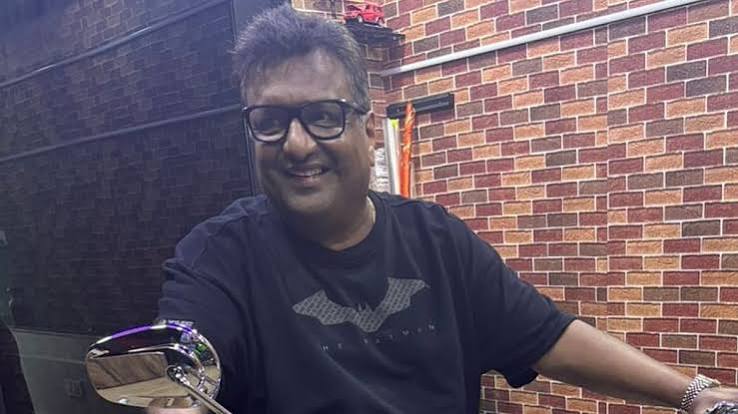
MUMBAI, November 1, 2026—Filmmaker Sanjay Gupta, known for crime dramas including Kaante, Shootout at Lokhandwala, and Shootout at Wadala, has died at 57 after a fall at his home in Mumbai, according to reports citing police. The Versova police registered an accidental death report after Gupta was found with a head injury at his residence late on October 30. Police said his family had raised no suspicion, but the circumstances remain subject to investigation, and the available reports do not establish a final medical finding.
The death was reported by Indian media on October 31. The Indian Express reported that police suspected Gupta had slipped and fallen in the kitchen at his Versova home. The Times of India reported that he was taken to Cooper Hospital and was pronounced dead. The reports describe the preliminary police account; they should not be read as a completed investigation or a final determination of every detail.
According to the police account reported by The Times of India, Gupta fell at his residence around midnight on Friday, October 30, and suffered a head injury. The incident came to light the following morning, and he was taken to Cooper Hospital, where he was pronounced dead. The Indian Express reported that police registered an accidental death report and were examining the circumstances surrounding the fall.
Police accounts reported so far indicate that Gupta’s family did not raise suspicion about the death. That is relevant to the initial case record, but it does not replace the investigation or medical assessment. The reports reviewed for this article do not provide a final autopsy finding. The cause should therefore be described as a reported fall and head injury, not as a conclusively established medical explanation beyond the information released by authorities.
An accidental death report is a police record used to examine a death that is not initially being treated as a confirmed homicide. Its registration does not, by itself, settle every question about how a person died. Investigators may document the scene, record statements, and review medical information as required. Until authorities release further findings, details that have not been confirmed should remain clearly labelled as unverified.
Gupta built a career as a director, writer, and producer in Hindi cinema, with a filmography that repeatedly returned to crime, revenge, police investigations, and underworld settings. His directorial debut was Aatish: Feel the Fire in 1994. Later titles such as Kaante, Shootout at Lokhandwala, Zinda, Shootout at Wadala, Jazbaa, and Kaabil helped make his name familiar to audiences who followed Hindi action and crime films.
Kaante, released in 2002, assembled a group of established actors in a story centered on a high-risk robbery. Shootout at Lokhandwala, released in 2007, drew on a police encounter in Mumbai and became one of the best-known films associated with Gupta’s name. Shootout at Wadala followed in 2013, continuing his interest in crime stories set against Mumbai’s urban history. The films differed in their plots and casts, but crime, confrontation, and stylized action remained recurring elements of his work.
Gupta’s career also included films beyond the crime genre. Jazbaa, released in 2015, placed a lawyer and a kidnapping at the center of its story, while Kaabil, released in 2017, combined a revenge narrative with a romantic drama. The range of projects shows that his work was not limited to a single kind of film, even though the crime thriller became the most consistent reference point in public discussion of his filmography.
The Shootout films connected commercial Hindi cinema with stories about organized crime and police operations in Mumbai. They dramatized events and characters for the screen, and their narrative choices should not be confused with a complete historical record of the real incidents that inspired them. Their popularity, nevertheless, placed Gupta among the filmmakers whose work helped sustain the city-set gangster and police-action film as a recognizable strand of mainstream Hindi cinema.
Such films often rely on heightened dialogue, sharply drawn characters, rapid editing, and confrontations designed for theatrical impact. Gupta’s filmography made regular use of those elements. The style appealed to viewers looking for tightly plotted action, while also drawing criticism at times for violence and stylization. Those reactions are part of the wider conversation around the genre, rather than a simple measure of one director’s influence.
The genre itself has changed over the decades. Streaming services have widened the audience for long-form crime stories, while theatrical releases compete with international action films and a larger range of Indian-language productions. Gupta continued to work within commercial cinema as those distribution patterns changed. His later projects included The Miranda Brothers, a sports drama released in 2024, according to entertainment coverage.
Gupta began directing in the 1990s, when Hindi cinema was navigating changes in music-led storytelling, overseas markets, and the growing influence of satellite television. His early work established a preference for crime and action narratives, and later films brought larger casts and more elaborate production values. His career crossed the transition from the traditional theatrical release cycle to a market in which streaming availability and digital promotion increasingly shape how films reach viewers.
As a writer and producer as well as a director, Gupta worked across several parts of the filmmaking process. Directing requires coordinating performances, camera work, editing, and production decisions into a coherent final film. Writing and producing involve different responsibilities, including story development, financing, and delivery. The public record of his filmography shows a long-running involvement in those functions, though the exact responsibilities varied from project to project.
His films also became part of the careers of many actors who appeared in them. Kaante brought together a large ensemble, while the Shootout films featured performers associated with Hindi action cinema. Kaabil brought him into a different kind of mainstream drama. It is more accurate to assess his career through those specific films and collaborations than to claim that one title alone defined all of his work.
News of Gupta’s death prompted tributes from people who had worked with him. The Times of India reported that actor Harshvardhan Rane remembered him warmly and recalled personal interactions outside film sets. Such tributes offer a view of how colleagues remember a filmmaker, but individual recollections should not be treated as a complete account of his personality or professional relationships.
The immediate public response has also included renewed attention to Gupta’s films and their place in Hindi cinema. For audiences, a death notice often leads to a re-examination of earlier work: films that were part of a particular period can be revisited in light of the director’s wider career. That renewed interest does not change the need to report the circumstances of the death carefully and to distinguish confirmed facts from early accounts.
The central confirmed development is that Gupta died after a reported fall and head injury, and police registered an accidental death report. The exact sequence of events, any final medical conclusions, and the outcome of the police inquiry should be reported only when authorities or reliable reporting provide further information. The sources reviewed for this article do not establish that anyone else was involved, and no such allegation should be inferred from the existence of a police procedure.
The distinction matters because early reports about deaths can be repeated and embellished as they circulate online. A family’s initial response, a police record, and an autopsy serve different purposes. None should be stretched beyond what it establishes. Readers should be wary of social media posts that claim to reveal a hidden cause or name a suspect without evidence from investigators.
The responsible approach is to update the account when credible new information becomes available. If police issue a further statement or the medical findings clarify the cause, those details can be added with attribution. Until then, the report should not speculate about a medical condition, motive, or circumstances that have not been confirmed.
For viewers looking back at Gupta’s work, Aatish: Feel the Fire marks the beginning of his directing career, while Kaante and the Shootout films remain among the titles most closely associated with his name. Zinda, Jazbaa, and Kaabil show other directions his projects took. The list is not a ranking of quality; it is a guide to the range of films that shaped his public reputation.
A director’s legacy is not determined only by box-office performance or the number of films in a catalogue. It also includes the genres he returned to, the actors and crews he worked with, the images and dialogue that audiences remember, and the debates his films generated. Gupta’s work in Hindi crime and action cinema provides one strand of that broader history.
The coming days may bring more verified information about the police inquiry and additional reflections from colleagues. For now, the facts that can be reported are limited but clear: Gupta died in Mumbai at 57 after a reported fall, police registered an accidental death report, and the circumstances remain under examination. His filmography, spanning Aatish, Kaante, the Shootout films, and later projects, remains the principal record of his work for audiences.



Comments (0)
Be the first to comment. Comments are published after moderation.