


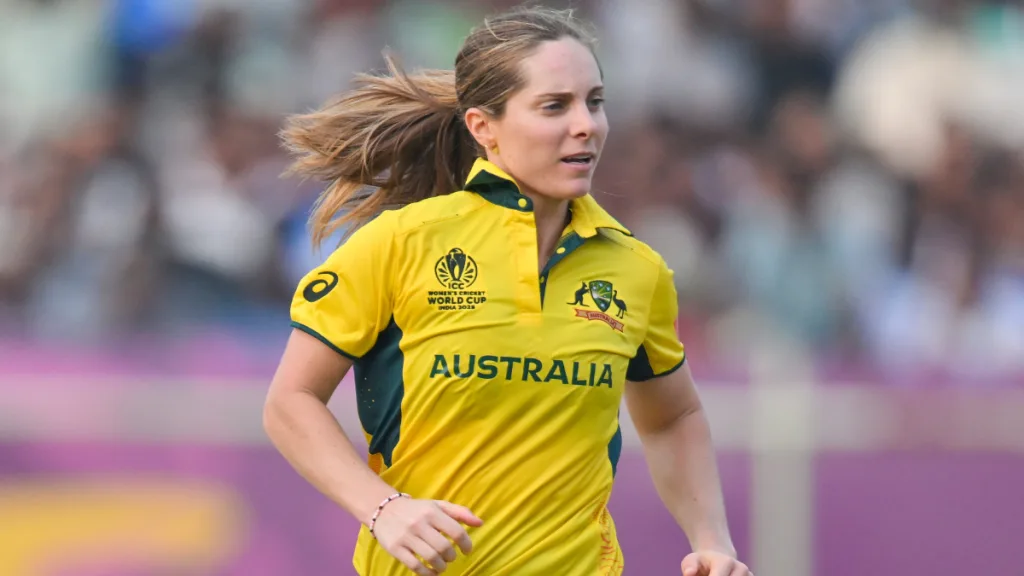
Kochi, November 1, 2026: The Women’s Premier League’s 2027 mini-auction left all five franchises with updated squads for the season scheduled from January 14 to February 7. Australia all-rounder Sophie Molineux was the highest-priced player, joining UP Warriorz for ₹1.10 crore, while India batter Kiran Navgire went to Delhi Capitals for ₹75 lakh.
The auction took place in Kochi on October 28. The official WPL 2027 auction page lists 25 players sold, including seven overseas players and 14 uncapped players, with total spending of ₹73.1 crore across the franchises. The results show how teams used a small number of available slots to address specific squad needs rather than rebuild entire line-ups.
For readers looking beyond the top bid, the most useful questions are which roles the teams filled, which players will have to compete for a place in the starting XI, and how the additions could affect combinations when the league begins in January. Auction prices are one signal of a franchise’s priorities, but they do not guarantee selection or playing time.
UP Warriorz secured Molineux for ₹1.10 crore, the highest price of the auction. The Australian left-arm spinner and all-rounder offers a combination of bowling options and batting depth, which can be valuable in a short T20 competition. Her role will depend on fitness, conditions, overseas-player combinations, and how the franchise balances its bowling attack with its batting order.
Delhi Capitals’ Kiran Navgire was the next major purchase at ₹75 lakh. Navgire is known for aggressive batting and gives Delhi another option for a middle order that can change the pace of an innings. The price suggests the franchise wanted a specific batting role, but her eventual position will depend on the team’s other selections and match situations.
Gujarat Giants bought G. Kamalini for ₹40 lakh, while Royal Challengers Bengaluru signed Jess Jonassen at the same price. Jonassen brings experience as a left-arm spinner and lower-order batter; Kamalini adds a young Indian wicketkeeping and batting option. Both signings illustrate how franchises weigh role coverage alongside headline talent.
Key buys and what each could add
| Player | Team | Reported price | Potential role |
|---|---|---|---|
| Sophie Molineux | UP Warriorz | ₹1.10 crore | Left-arm spin and all-round depth |
| Kiran Navgire | Delhi Capitals | ₹75 lakh | Power-hitting option in the batting order |
| G. Kamalini | Gujarat Giants | ₹40 lakh | Young Indian wicketkeeping-batter option |
| Jess Jonassen | Royal Challengers Bengaluru | ₹40 lakh | Left-arm spin and lower-order batting |
| Grace Harris | UP Warriorz | ₹30 lakh | Power-hitting and off-spin option |
| Sneh Rana | UP Warriorz | ₹30 lakh | Indian spin-bowling all-rounder |
| Orla Prendergast | Gujarat Giants | ₹30 lakh | Overseas all-round depth |
| Tejal Hasabnis | Royal Challengers Bengaluru | ₹30 lakh | Indian batting depth |
The prices above are the amounts reported in auction coverage and the league’s results material. They describe what franchises bid, not the players’ likely output or a guarantee of how many matches they will play. Selection can be affected by form, fitness, overseas-player limits, pitch conditions, and the balance of the final XI.
UP Warriorz used the most slots.
UP Warriorz made eight signings, more than any other franchise, adding Molineux, Sneh Rana, Grace Harris, Sushma Verma, Asha Sobhana, Kathryn Bryce, Manali Dakshini, and Sahana Pawar. That group includes overseas all-round options as well as Indian players who can strengthen batting, wicketkeeping, and spin depth.
The team’s choices give the coaching staff several possible combinations, but they also create selection decisions. Molineux and Harris can contribute in more than one discipline; the question will be how the franchise deploys them alongside the retained players and which bowling options are most useful on a given surface. Sneh Rana and Asha Sobhana provide additional spin choices, while Sushma Verma offers wicketkeeping cover.
Royal Challengers Bengaluru signed four players: Jonassen, Hasabnis, Chloe Tryon, and Vrinda Dinesh. The additions provide left-arm spin, overseas all-round skills, and Indian batting options. The final combination will depend on how the team uses its existing overseas players and which Indian batters earn regular roles.
Delhi’s most expensive buy was Navgire. The franchise also added Uma Kashvi, Kirstie Gordon, and Nazma Khan at reported prices of ₹10 lakh each. Uma Kashvi drew attention as a teenage signing, but age alone does not determine readiness for the league. Her development, training performance, and opportunities in the team environment will matter more than the headline attached to the purchase.
Gujarat Giants signed Kamalini, Orla Prendergast, and Samaira Raghav. Kamalini’s wicketkeeping and batting profile offer flexibility, while Prendergast adds another overseas all-round option. The value of these purchases will depend on whether the players fill roles that were difficult to cover during the previous season.
Mumbai Indians concentrated on several lower-priced additions, including Shweta Sehrawat, Disha Kasat, Latika Inamdar, Bharti Rawal, Saanika Chalke, and Akshita Bhatia. Lower prices do not mean a player is unimportant: squad depth can become decisive when injuries, international commitments, or form changes disrupt the preferred XI.
The auction pool contained 146 players competing for 27 available slots, according to the league’s pre-auction announcement. With a finite number of places and salary budgets, franchises had to prioritize the roles they considered most urgent. Some players who entered the auction at higher base prices may have missed out because teams had already filled those roles or wanted different combinations.
An unsold player is not necessarily a poor player. The result can reflect a mismatch between a team’s needs and the available budget, the overseas-player limit, the balance of the existing squad, or a preference for a particular skill set. Franchises may also reassess options later if replacements are required, subject to the league’s rules and availability.
The auction also had a significant uncapped Indian contingent. The official results page lists 14 uncapped players among the 25 sold. That creates opportunities for domestic players to enter a high-profile league, but the next step is proving consistency in training and match conditions. A contract is the start of that process rather than proof that a player will immediately become a regular starter.
The WPL 2027 season is scheduled for January 14 to February 7. The auction has completed one part of preparation; the franchises still need to finalize training plans, manage player workloads, and decide how the new signings fit around retained players. Teams will also have to respond to injuries and form and the specific conditions at each venue once the schedule is confirmed in full.
For fans, the most meaningful measure of the auction will be visible on the field. Molineux’s price will matter less than whether her bowling and batting influence close matches. Navgire’s purchase will be judged by how effectively she converts opportunities into runs. Kamalini and the other young signings will be assessed by their development and the roles they are trusted to perform.
For the league, the auction offers another route for Indian players to gain experience alongside international professionals. The number of uncapped players sold suggests franchises were willing to invest in domestic depth, though the actual impact will depend on selection and playing time. The league’s official squad information and match-day teams will provide a clearer picture as January approaches.
- Final squad announcements and any replacement signings permitted under league rules.
- How teams balance overseas players with Indian batting, spin, and pace options.
- Whether young signings such as Uma Kashvi and G. Kamalini earn opportunities in the starting XI.
- Player fitness and international commitments before the January start.
- The final fixture list and venue conditions, which will influence tactical combinations.
The auction produced a clear top buy in Molineux and gave every franchise additional options. The real test will be whether those options address the teams’ weaknesses and hold up across a month-long competition. Prices are a useful snapshot of demand on auction day, but performances and selection decisions will determine the value of the signings.
Sources: Women’s Premier League, “TATA WPL Auction 2027” official results;
Who was the most expensive player at the WPL 2027 auction?
Sophie Molineux was the highest-priced player, joining UP Warriorz for ₹1.10 crore, according to the official WPL auction results.
How many players were sold at the WPL 2027 auction?
The official WPL auction page lists 25 players sold, including seven overseas players and 14 uncapped players.
When does the WPL 2027 season begin?
The league announced that the 2027 season is scheduled from 14 January to 7 February 2027. Check the official WPL site for the latest schedule and squad updates.




Comments (0)
Be the first to comment. Comments are published after moderation.