


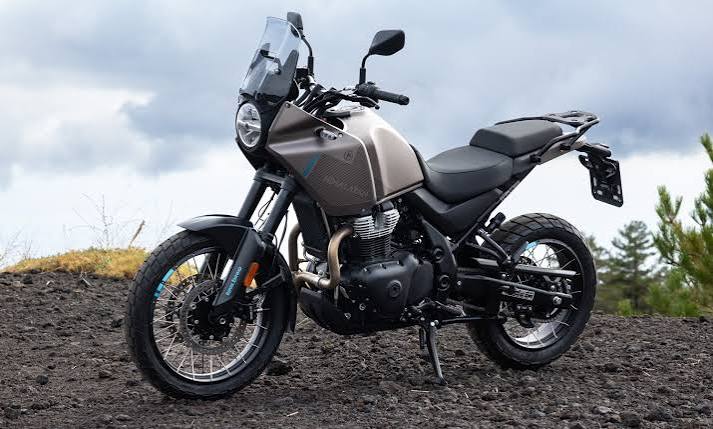
Royal Enfield has released official images of the Himalayan 750 ahead of EICMA 2026 in Milan, putting a larger-capacity adventure motorcycle into the company’s immediate product spotlight. The bike is expected to be shown at the motorcycle exhibition, which runs from 3 to 8 November. The images establish that the project has moved beyond early spy photographs, but they do not answer every question a potential buyer will have about final specifications, pricing, or the date it will reach Indian showrooms.
The Himalayan 750 is expected to sit above the Himalayan 450 in Royal Enfield’s adventure range. That positioning matters because riders shopping for a larger touring motorcycle often weigh highway performance, passenger comfort, luggage capacity, and long-distance stability against price, weight, and ease of handling. Until the company publishes a full specification sheet, however, buyers should treat detailed performance figures and equipment lists as provisional rather than confirmed production data.
The official images provide a clearer view of the motorcycle’s overall design and proportions than earlier disguised test-bike sightings. They show an adventure-oriented layout intended for longer-distance riding, with an upright riding position and bodywork consistent with the Himalayan family. The images are useful evidence of the product’s design direction, but a photograph cannot establish final suspension travel, ground clearance, seat height, kerb weight, fuel capacity, or the calibration of electronic systems.
Reports ahead of the exhibition have described the motorcycle as using a 750cc parallel-twin engine and have discussed features such as cruise control. Those details should be distinguished from a full manufacturer specification. A displacement figure or a feature visible in a pre-production image may still differ from the final production model. Royal Enfield has not yet supplied all the technical information needed for a reliable comparison of power, torque, gearing, service intervals, and touring range.
The same caution applies to wheel sizes, brake hardware, rider aids, and trim variants. Adventure motorcycles can be offered in versions that differ by wheel type, tires, accessories, and electronics. A model displayed at an international show may be a near-production prototype, a concept or a configuration intended for a particular market. The exact status of each component should be checked against the manufacturer’s final specification sheet when it becomes available.
The existing Himalayan 450 serves riders who want a middleweight adventure motorcycle with a manageable engine size and a chassis designed for mixed road conditions. A larger Himalayan could appeal to riders who spend more time on highways, travel with a passenger, or carry luggage over long distances. More displacement does not automatically mean better touring ability, but it can provide additional power reserves for overtaking and maintaining speed with a load, depending on the engine’s output and gearing.
The trade-offs are equally important. A larger motorcycle can be heavier, more expensive to buy and run, and harder to maneuver at low speed or on uneven ground. Fuel consumption depends on riding style, gearing, aerodynamics, load, and engine tuning rather than capacity alone. For riders who frequently negotiate city traffic, narrow lanes, or technical trails, the lighter motorcycle may remain the more practical option even if the larger model offers greater performance on open roads.
Seat height and center of gravity matter as much as headline power. Adventure motorcycles often have tall seats and long-travel suspension to increase ground clearance, but those characteristics can make repeated stops or tight turns difficult for some riders. A test ride should include low-speed maneuvers, U-turns, a loaded riding position, and a check of whether the rider can comfortably manage the motorcycle when parking or reversing it.
Long-distance use also depends on ergonomics and heat management. Handlebar reach, seat shape, wind protection, vibration, passenger space, and luggage mounting can influence fatigue over several hours. Buyers should wait for independent road tests before assuming that a bigger engine automatically makes a better touring motorcycle. A manufacturer’s launch material can describe design goals, but comfort and handling require real-world evaluation.
How it may fit into the Indian market
India has a growing range of mid- and large-capacity motorcycles used for touring, commuting, and recreational riding. A larger Himalayan would compete for customers who want a single motorcycle that can cover daily travel and long weekend trips. The exact competitive set will depend on price, power, weight, service support, and the final equipment package. Until those details are confirmed, comparing it directly with a particular rival by horsepower or value would be premature.
Royal Enfield’s existing dealer and service network could be a practical advantage for buyers, particularly those who travel between cities. Even so, service availability for a new model depends on technician training, parts supply, and the rollout schedule. Owners should check the service interval, warranty terms, roadside assistance, and availability of touring accessories before treating network size as a guarantee of convenient ownership everywhere.
The motorcycle’s eventual price will determine whether it reaches riders upgrading from smaller adventure bikes or competes mainly with established premium models. There is no confirmed Indian ex-showroom price in the material reviewed for this report. Prices reported before the official announcement may be estimates based on the expected engine size or competitor positioning. Buyers should avoid paying a booking amount based only on an unofficial price leak or a dealer’s verbal estimate.
What buyers should watch at EICMA
The first item to check is the official specification sheet. It should state engine capacity, maximum power and torque, transmission, final drive, suspension components, braking hardware, wheel sizes, tyres, fuel capacity, kerb weight, and dimensions. Those details allow riders to compare the new motorcycle with the Himalayan 450 and with other touring bikes using the same measures rather than marketing language.
The second is the electronics package. If cruise control is included, buyers should confirm the versions that receive it, how it is operated, and whether it works across the full range of gears. Other questions include switchable ABS, traction control, riding modes, navigation integration, instrument display functions, and charging ports. A feature listed on a prototype may not appear on every market version, so the production specification matters.
The third is the launch timeline. An international reveal does not necessarily mean immediate Indian deliveries. Manufacturers may announce a concept or near-production model at EICMA and then confirm the production version, pricing, and booking process later. BikeWale and Navbharat Times have reported that an India reveal may follow at Royal Enfield’s Motoverse event later in November. That remains a reported expectation, not a confirmed retail launch or delivery date; the company would need to announce bookings, pricing, and showroom availability separately. The timing should be verified from a formal company announcement rather than inferred from the exhibition date.
Potential buyers should also look for warranty details, accessory prices, and service requirements. Adventure riders may add luggage racks, panniers, crash protection, auxiliary lighting, or touring seats, and the total cost can rise substantially beyond the base ex-showroom price. Official accessory compatibility matters because poorly fitted equipment can affect handling, electrical loads, or warranty coverage.
Until the company releases full details, the most accurate conclusion is limited but useful: the Himalayan 750 is a real product project with official imagery and an expected EICMA appearance, while several specifications and the India sales timeline remain unconfirmed. Riders can use the reveal to understand the model’s design direction, but a buying decision should wait for verified technical information, a confirmed price, and independent riding impressions.
Has Royal Enfield confirmed the Himalayan 750’s Indian price?
No confirmed Indian ex-showroom price was available in the material reviewed for this report. Treat pre-launch price estimates as unconfirmed until Royal Enfield announces the figure.
Is the Himalayan 750’s full specification sheet available?
The official images provide a design preview, but a complete production specification covering power, torque, weight, suspension, fuel capacity, and all electronics still needs to be confirmed.
When is the Himalayan 750 expected to appear at EICMA 2026?
The motorcycle is expected to appear at EICMA in Milan, which runs from 3 to 8 November 2026. An exhibition appearance does not by itself confirm the Indian delivery date.



Comments (0)
Be the first to comment. Comments are published after moderation.