


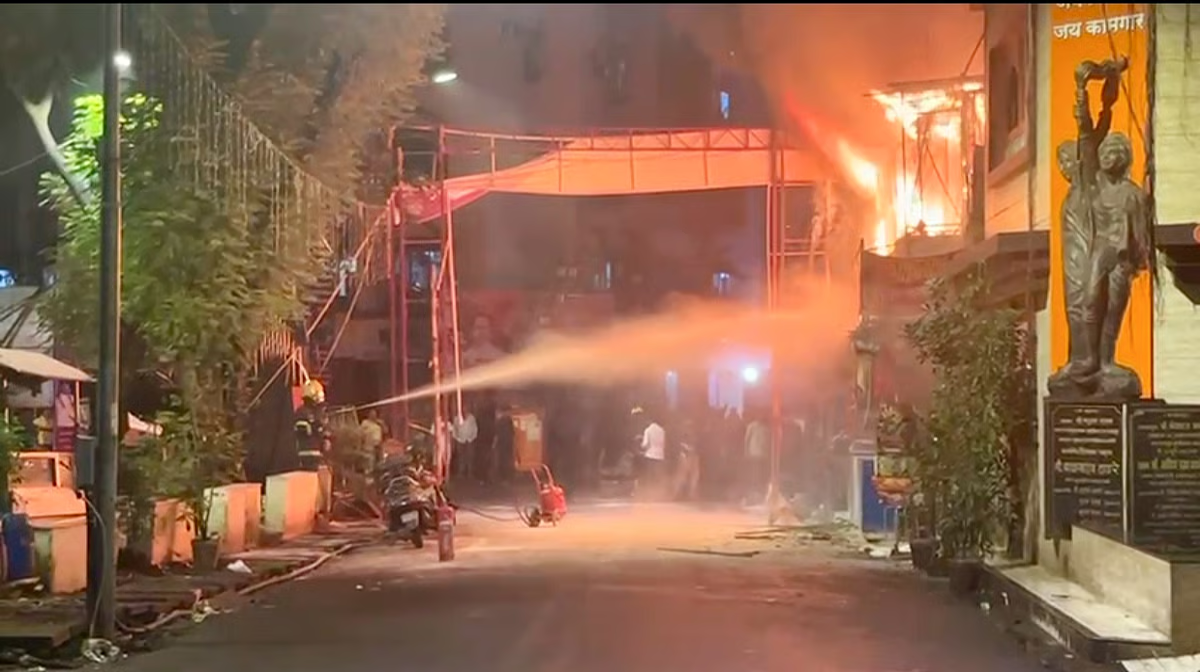
MUMBAI, November 10, 2026: A 16-year-old boy died after a fire broke out at a shop storing firecrackers and electrical materials in Malad’s Malvani area. The Mumbai Malvani fire was reported at 9.56 pm on Monday, November 9, near Gate No. 8 on Abdul Hamid Marg; an explosion was followed by the collapse of the shop’s slab. The blaze was brought under control about 40 minutes later, according to incident details attributed to the Brihanmumbai Municipal Corporation’s Disaster Management Cell and Mumbai Fire Brigade.
The boy had initially been reported missing during the emergency response. He was later found inside the shop and taken to Shatabdi Hospital in Kandivali. The hospital’s chief medical officer said he had suffered 100 per cent burn injuries and was declared brought dead. The authorities have not publicly established what first ignited the fire or why the teenager was inside the premises when the incident occurred.
Also read: Mumbai, Thane Ban Aerial Firecrackers After Diwali Fires
The shop was on the ground floor of a building close to Gate No. 8. The fire brigade’s incident account described the affected premises as roughly 20 feet by 30 feet and said the materials involved included firecrackers, electrical wiring and electrical installations. Six fire brigade vehicles were sent to the location, while police, ward staff, an electricity distribution team and ambulance services were also involved in the response.
The first emergency call was recorded at 9.56 pm, according to the BMC information cited in reports. Firefighters reached the site and began operations at a shop where firecrackers and electrical material were stored together. The fire was contained within the shop’s reported footprint, but the situation became more dangerous after firecracker explosions were heard and the slab collapsed.
The sequence matters because the collapse appears to have complicated the search for the missing boy. Reports say he was initially unaccounted for while crews were dealing with the blaze. He was found inside only after the response had progressed. The available public account does not say whether he was a shop worker, a family member, a customer or someone who had entered the premises for another reason. It would be premature to assign him a role without confirmation from the family or investigators.
Firefighters brought the blaze under control at about 10.36 pm. The teenager was transported to Shatabdi Hospital, where doctors recorded fatal burn injuries. The reported medical assessment establishes the severity of the injuries, but it does not by itself explain the precise cause of the fire, the point at which the slab gave way or whether any safety system inside the premises was functioning.
The BMC account, as reported by IANS, said the fire involved firecrackers, electrical wiring and installations. That description identifies the material present in the shop; it is not a final forensic finding about the source of ignition. An electrical fault, an accidental ignition of fireworks or another cause should not be treated as established until the fire brigade and police complete their examination.
The central questions concern the origin of the fire, the way combustible goods were stored and the circumstances in which the boy was inside the premises. Investigators will need to establish whether the shop held the required permissions for the products stored there, whether the quantity and arrangement of the material complied with applicable rules, and whether electrical equipment or wiring contributed to the blaze. Those are questions for the inquiry, not conclusions that can be drawn from the fact that firecrackers were present.
The building’s layout and access arrangements will also matter. Fire crews have to reach the point of ignition, move equipment through available entrances and search areas that may have been affected by heat, smoke or structural damage. A slab collapse can change the conditions inside a shop and make it harder to determine where a person was located. The public information released so far does not provide a structural assessment or a detailed account of the rescue operation.
The investigation should clarify who owned or operated the premises, who was responsible for the stored material and whether the shop had been inspected. It should also establish whether the electrical installations had been maintained and whether fire extinguishers or other protective measures were available and usable. Until those records are examined, it would be inaccurate to describe the premises as illegal or to claim that a particular safety rule was breached.
There is also a need to distinguish between the immediate fire response and the regulatory questions that follow. The brigade’s arrival and the time at which the blaze was controlled are part of the emergency timeline. Licensing, storage conditions, building permissions and responsibility for the teenager’s presence are separate matters that may require documents, witness statements and technical examination.
Also read: 10-Year-Old Dies After Hand-Held Firecracker Explodes in Delhi’s Narela
The Malvani death comes after a busy period for Mumbai’s fire services. Earlier reporting on the Diwali response said the Mumbai Fire Brigade received 142 fire calls on November 8, with 137 attributed to firecrackers. Those figures describe calls received during the festival period; they do not mean that every call involved a large building fire or that every incident had the same cause. They nevertheless show the scale of the workload faced by emergency crews when several incidents occur across a large city in a short period.
The BMC has separately prohibited rockets and similar aerial firecrackers across Mumbai until November 25. That order is a targeted restriction on fireworks that travel into the air, not a blanket ban on every type of firecracker. The existence of the order does not establish that the Malvani shop stored aerial fireworks, that such products were involved in the explosion or that the premises violated the restriction. Those details have not been confirmed.
A separate incident in Delhi’s Narela area involved the death of a 10-year-old boy after a hand-held firecracker exploded. The circumstances were different and the two cases should not be treated as having a common cause. Together, however, they underline that festival-related risks are not limited to air pollution or large fires: the storage, handling and use of fireworks can also lead to fatal injuries when something goes wrong.
Also read: Factory Fires Hit Delhi, Ghaziabad and Hyderabad on Diwali Evening
For densely populated neighbourhoods, the location of a firecracker shop is as important as the product itself. Commercial premises may sit beside homes, small workshops and other businesses, while narrow lanes can limit the space available for fire engines. If combustible goods are stored close to electrical installations or in areas without clear exits, a small incident can become harder to contain. The Malvani inquiry will need to determine whether any of those conditions were present at this particular shop rather than assume them.
Residents and shopkeepers need clear information about the rules governing fireworks, storage and emergency access. Municipal inspections can identify unsafe arrangements before an incident, while accurate public reporting can help residents understand which restrictions apply and where they apply. A citywide order on aerial fireworks does not replace the need to enforce existing requirements for storage, electrical safety and building use.
The next confirmed information should come from the fire brigade’s cause assessment, the police inquiry and any statement issued by the civic authority after examining the premises. Those findings should establish whether the shop had the necessary permissions, what triggered the blaze and whether any failure in storage or electrical safety contributed to the death. Until then, the confirmed facts remain limited: a 16-year-old boy died after a firecracker-shop fire in Malvani, the slab collapsed after explosions, and the fire was brought under control at about 10.36 pm.



Comments (0)
Be the first to comment. Comments are published after moderation.