


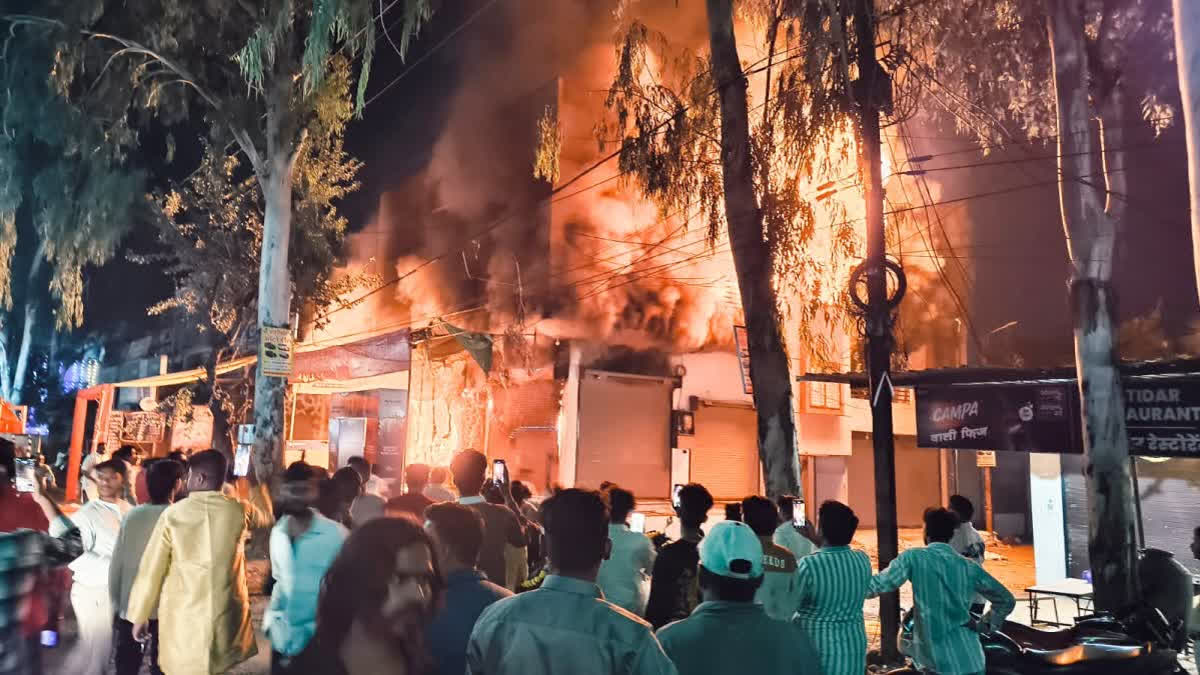
BHOPAL, November 9, 2026 — Madhya Pradesh fire deaths were reported in three separate incidents during the Diwali night period, with at least 13 people dead across Katni, Seoni and Ujjain. Twelve people died in the two family fires, according to police and district officials; local reports said a 107-year-old man died after a separate fire in Ujjain. The causes of the incidents had not been established in a final investigation.
The Madhya Pradesh fire deaths exposed different risks in buildings where shops and homes share the same structure. In Katni, a fire that began in a crockery business spread through a three-storey building where a family lived. In Seoni, flames engulfed a residential property occupied by a goldsmith’s family. In Ujjain, smoke from a shop fire reportedly spread into the upper part of a building and affected an elderly resident.
The Katni blaze broke out around midnight in Barhi, where a crockery shop occupied the ground floor of a three-storey building. Six members of the family living in the building died, including a two-month-old infant. Two other family members managed to escape, according to local reporting. The fire spread through stored household and shop materials, leaving rescuers to work through smoke and intense heat before they could reach people trapped inside.
District officials said the building’s layout made the rescue difficult. The structure had a narrow access route, and the firefighting operation required equipment and teams from nearby areas. Local reports said a wall was broken to create another route into the building. Katni Collector Ashish Tiwari acknowledged problems with fire-tender equipment and apologised for the difficulties faced during the response. He said the administration would examine the failures and take action where required.
The details are important because the fire was not confined to a shop or warehouse. A business on the ground floor and a family home above it created a single emergency in which smoke, heat and stored goods affected people on different levels. The presence of a small infant among the dead also underlined how little time residents may have to escape when a fire spreads rapidly through a mixed-use building.
In Seoni district, six members of a family died after a fire broke out at a house in Chhapara in the early hours of Monday. Four other people were injured and taken for treatment, according to reports citing police. The family was inside the building when the fire spread. Police said the cause was still under investigation, although a short circuit was among the initial possibilities being examined. No final forensic finding had been announced.
The Seoni incident was separate from the Katni fire, and there is no evidence that the two were linked. The common feature was that several members of a family were inside a residential building when flames and smoke spread. Investigators will need to establish where the fire began, whether electrical equipment or wiring was involved, how quickly residents were alerted and whether exits were accessible once the building filled with smoke.
The state government announced financial assistance for bereaved families. Chief Minister Mohan Yadav directed that ₹4 lakh be provided to each family, according to Live Hindustan. The New Indian Express reported the assistance in connection with the 12 deaths in Katni and Seoni. The announcement does not resolve questions about the causes of the fires or the adequacy of local emergency services, but it provides immediate support to families who have lost relatives.
Local media reported a third fatal incident in the Nagjhiri area of Ujjain, where a fire broke out in a shop and smoke spread through the building. A 107-year-old man was reportedly rescued and taken to hospital but died during treatment. The Free Press Journal and other local outlets reported the death, while the full circumstances and medical cause had not been confirmed in a detailed official statement at the time of writing.
The Ujjain case is why the overall toll was reported as 13 rather than 12. The two deaths counts from Katni and Seoni were reported by police and district officials; the additional Ujjain death was reported by local outlets. The three incidents should not be treated as having the same cause. Each requires a separate investigation into the point of ignition, building use, materials stored inside, access for firefighters and the time taken to alert emergency services.
Also read: Factory Fires Hit Delhi, Ghaziabad and Hyderabad on Diwali Evening
The incidents raise questions about fire safety in buildings that combine retail activity, storage and residential use. Shops may keep packaging, plastics, cardboard, fabrics or other materials that burn quickly. If electrical wiring is old, overloaded or poorly maintained, a fault can ignite nearby goods. If a building has only one narrow exit, residents on upper floors may be cut off when smoke moves through a stairwell. These are risks that building inspections and fire-safety rules are intended to reduce, but the investigations must determine which factors were present in each location.
The response in Katni has also drawn attention to the condition of firefighting equipment. A fire tender that arrives quickly is not enough if hoses, pumps or water connections fail during an operation. The collector’s acknowledgement of equipment problems means the administration will need to explain what failed, whether the equipment had been inspected and whether the crews had adequate backup. The same questions apply to nearby towns that rely on shared fire services and may take time to bring additional vehicles to a large blaze.
Fire departments and municipal authorities will also need to examine mixed-use buildings, storage practices and emergency exits. Inspections should identify whether commercial stock is being kept in stairwells or near electrical panels, whether upper floors have independent escape routes and whether alarms can alert residents before smoke blocks access. Enforcement is especially important in smaller towns, where shops and homes often occupy the same building and fire services may have fewer vehicles than larger cities.
Diwali-related fires are not always caused by firecrackers. The three incidents reported in Madhya Pradesh should not be attributed to fireworks without evidence from investigators. The Katni and Seoni fires occurred in buildings where electrical faults and combustible materials are being examined; the Ujjain incident also requires a separate cause assessment. Treating every fire during a festival as a firecracker accident would obscure the specific safety failures that authorities need to identify.
The next steps are the publication of investigation findings, a clear account of the Ujjain death and an assessment of the equipment problems reported in Katni. Authorities should also confirm whether the ₹4 lakh assistance applies to all bereaved families across the three incidents. Until those details are clarified, the confirmed and reported tolls should remain distinct: 12 deaths in the Katni and Seoni family fires, with one additional Ujjain death reported by local media.




Comments (0)
Be the first to comment. Comments are published after moderation.