


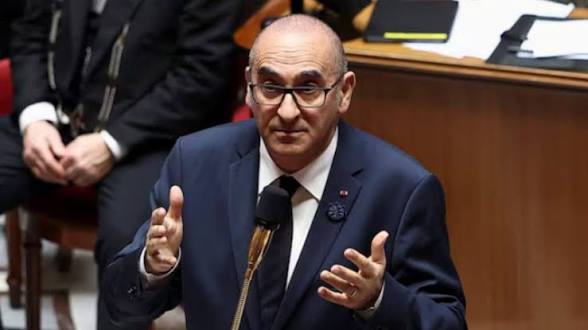
A police officer’s home in Auch, in southwestern France, was destroyed by fire on Saturday, November 7, in an incident that Interior Minister Laurent Nuñez said authorities believe was a deliberate attack connected to the officer’s profession. The minister said the house was lost despite firefighters’ intervention and pledged that investigators would receive the resources needed to identify those responsible. A local newspaper reported that police unions viewed the fire as a possible act of retaliation after a drug-related operation in the Gers department, but that connection has not been confirmed by investigators.
Nuñez’s assessment was reported by Reuters in a statement attributed to a post he published on X. He said the available indications pointed to the officer being targeted because of his work. The minister did not identify the officer, disclose the address or describe the circumstances in which the fire began. He also did not provide details about possible suspects, arrests or the investigation’s early findings. The public account therefore establishes the government’s concern about a targeted attack, but not who carried it out or the precise motive.
The fire destroyed the residence despite the efforts of firefighters, according to the minister’s statement. The reports reviewed did not establish whether the officer or members of the family were inside when the blaze started, whether anyone was injured or whether neighbouring properties were damaged. Those details matter because investigators will need to determine not only how the fire was started but also whether the people living at the property were deliberately placed at risk. No casualty figure should be inferred from the fact that the house was destroyed.
La Semaine des Pyrénées reported that police unions UN1TÉ 65, UN1TÉ 64 and UN1TÉ Zone Sud had condemned the incident and expressed support for the officer and the family. The local report described the fire as a possible reprisal following an anti-drug arrest operation in the Gers. It did not establish that the officer whose home was damaged took part in that operation, identify the operation’s targets or provide evidence linking any suspect to the blaze. The possible connection remains an allegation to be tested, not an established motive.
The inquiry now turns on evidence from the property, the officer’s recent assignments and any threats received before the blaze.
The first task is to determine the origin and cause of the fire. Investigators will need to examine the property, identify any accelerant or ignition device if one was used, review available camera footage and establish the timeline before emergency services arrived. The fact that the minister described the incident as deliberate reflects the authorities’ current assessment, but a criminal investigation must establish the evidence behind that conclusion and whether the fire was planned, carried out by one person or involved others.
The possible link to an anti-drug operation will require separate verification. The local report indicates that unions suspect a retaliatory motive, but it does not provide enough information to connect the fire to a particular arrest, suspect or police team. Investigators would need to examine whether threats were made before the fire, whether the officer had been named or targeted previously and whether any communications or surveillance point to a link. Until those steps are completed, it would be premature to describe the blaze as an organised attack by a criminal network.
The minister’s public response suggests that the government is treating the case as more than an ordinary residential fire. Nuñez said all necessary resources would be deployed to identify those responsible and bring them to justice. That pledge does not disclose which investigative unit is leading the inquiry or whether additional protection has been offered to the officer and family. Authorities have not publicly described any security measures, and the available reporting does not say whether the family has been relocated or whether the property remains under forensic examination.
The incident also raises a practical question for police forces: how to protect officers away from their workplaces. Police officers can face threats connected to investigations, arrests and routine enforcement, but a home is also a private space shared with family members. If the authorities establish that the residence was selected because of the officer’s job, the case could prompt renewed discussion of threat assessments, reporting channels and support for officers whose personal details or addresses may be exposed. Those broader implications should not be mistaken for proof of a wider campaign; no such pattern has been established in this case.
For now, the confirmed information remains limited. The home of a police officer in Auch was destroyed by fire on November 7; the interior minister said officials believe it was a deliberate attack motivated by the officer’s profession; and local police unions condemned the incident. A possible connection to an anti-drug operation has been reported locally but has not been independently confirmed. The names of suspects, the precise cause of the fire, the presence or condition of the family and any arrests remain unknown in the reporting available at this stage.
The next substantive update should come from investigators or prosecutors once the fire scene has been examined and the initial inquiries have advanced. Until then, the case should be reported as a suspected targeted arson, with the proposed retaliation motive clearly attributed to the local report and not presented as fact. The central public-interest issue is whether an officer’s home was deliberately attacked because of police work — and whether the people responsible can be identified without exposing the officer’s family to further risk.




Comments (0)
Be the first to comment. Comments are published after moderation.