


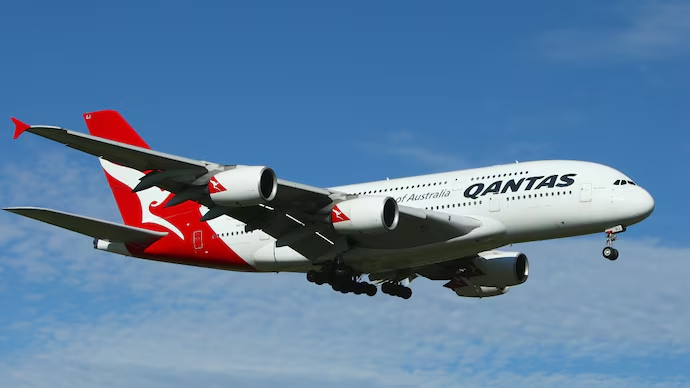
SYDNEY, November 10, 2026 — Qantas plans to restructure about 850 roles in Australia under a multi-year technology partnership with Accenture, shifting some corporate services to teams based mainly in India as the airline overhauls its back-end systems and expands the use of automation and artificial intelligence.
The airline says the roles will be affected over several years, with the first wave of changes expected to be in place by mid-2027. Finance, procurement, people and marketing functions are among the areas involved. Qantas has said individual outcomes have not yet been determined and that it will consult affected employees and unions before deciding how the changes will apply to specific jobs.
The partnership is designed to modernise the systems, processes and data that support Qantas’s corporate operations. The company says it has more than 1,000 legacy applications that were built over decades and were not designed to work together. Connecting those systems is intended to reduce duplication, simplify workflows and make it easier to introduce new digital services across the airline.
Some services currently handled by Qantas employees will move to Accenture, with most of that work expected to be delivered by teams in India and some in Australia. The company has also said those services may be transformed further through automation and AI over time. The announcement therefore combines three changes: outsourcing, relocation of work and redesign of processes using newer technology.
Qantas has described around 850 roles as affected, a phrase that does not mean every position will automatically end in a redundancy. The company says it will consider redeployment into other roles where possible, including positions it is creating in Australia, and will offer reskilling, retraining and support. The final number of employees who leave the airline will depend on consultation and the roles that remain after the new operating model is designed.
That distinction matters because the headline number is being used in different ways across reporting. Some coverage has described the plan as 850 job cuts, while Qantas’s own announcement says 850 roles are expected to be affected over the coming years. The airline has not published a final list of individual jobs or a department-by-department redundancy schedule. Until those details are settled, the figure should be treated as the scale of the restructuring rather than a confirmed count of employees who will be dismissed.
The first phase is expected to affect finance, procurement, people and marketing teams. These functions support the airline’s operations but are not the same as frontline roles such as pilots, cabin crew, aircraft engineers or airport ground staff. Qantas says its broader Australian workforce is about 28,000 people, meaning the 850 affected roles represent roughly 3% of that total.
The company says Accenture will invest upfront to accelerate the modernisation of its data platforms. Qantas believes the work will create benefits beyond corporate administration, including improvements to customer experience and airline operations. It has not, however, published a detailed breakdown of expected savings, productivity gains or the timetable for each technology project.
The agreement is part of a larger technology programme. Qantas says it spends more than A$1 billion a year on technology and is building a Product Innovation Centre in Adelaide that is expected to grow to more than 400 roles. The airline also says thousands of employees already use AI tools in their daily work. Those investments show that the company is not simply reducing technology spending; it is changing where some work is performed and how the systems supporting it are organised.
The airline is attempting to simplify a complex technology estate while preparing for a period of major fleet renewal. Legacy applications can be expensive to maintain, difficult to connect and slow to adapt when customer expectations or operating requirements change. Replacing or integrating them can improve data quality and make it easier to introduce automation, but the process also creates disruption for employees whose jobs are built around the existing systems.
Qantas argues that the pace of technological change is forcing large businesses to rethink how work is organised. AI can assist with document processing, data reconciliation, planning, customer service and software development. It can also change the number of people needed for certain tasks. The company has not said that AI alone will account for the 850 affected roles; the announced arrangement also includes moving services to an external provider and consolidating systems.
The airline’s explanation comes amid broader cost pressures in aviation. Fuel prices, aircraft availability, maintenance costs and the expense of renewing fleets all affect operating margins. Qantas has said customer demand remains resilient, but airlines still need to manage fuel and capacity as geopolitical events disrupt routes and energy markets. A technology overhaul can be presented as a long-term efficiency measure, but its value will depend on whether it delivers savings without weakening service quality or operational resilience.
The move also follows other Australian companies that have announced restructuring or offshoring plans. The Guardian reported that the Qantas announcement came after workforce changes at National Australia Bank and Canva, adding to a wider debate about how AI adoption, cost reduction and the transfer of corporate work overseas are affecting Australian employment. Earlier reporting on Telstra’s joint venture with Accenture also described the movement of some work to India as part of a technology and data programme.
For workers, the timing and process are as important as the total number. Employees in affected teams will want to know which functions are moving, whether existing roles can be redesigned, what redeployment options are available and how much time they will have to retrain. A broad promise of support does not answer those questions until the company provides a clearer map of the jobs and skills it expects to need.
Unions have criticised outsourcing decisions at Qantas in the past, particularly after the airline’s pandemic-era outsourcing of ground workers led to lengthy legal and industrial disputes. The current plan concerns corporate functions rather than the same group of ground-service roles, but the history is likely to shape how employees and unions approach the consultation. The Australian Services Union said it was meeting members following the announcement, according to ABC News.
The transfer of some services to Accenture’s India-based teams creates an opportunity for the company’s Indian operations, but it does not automatically translate into a public commitment to a fixed number of new jobs in India. Qantas has not disclosed how many positions will be transferred, where the teams will be located or how the work will be divided between India and Australia. Accenture’s existing scale in India gives it the capacity to deliver large business-process and technology programmes, but the final staffing model remains to be worked out.
For Indian employees, the work could involve finance operations, procurement support, human resources processes, marketing services, data management and technology modernisation. These functions require more than low-cost processing. They can depend on knowledge of aviation systems, compliance, customer data, financial controls and the ability to work with teams operating across time zones. The quality of the transition will depend on how much process knowledge is transferred and how clearly responsibilities are divided between Qantas and Accenture.
The deal also illustrates a wider change in the global services market. Indian technology and business-services firms have long won work by combining skilled labour, scale and round-the-clock delivery. The next phase is increasingly tied to automation and AI, which can reduce the time needed for repetitive tasks while increasing demand for people who can manage systems, interpret data and handle exceptions. The commercial value of a contract may therefore rise even if the number of staff assigned to a process does not increase in proportion.
That creates a difficult balance for both countries. Australian workers face the risk that work they have performed for years will be transferred or redesigned, while Indian teams may receive new responsibilities but also face pressure to deliver more output with automation. Neither outcome is guaranteed by the announcement. The company’s consultation process and Accenture’s implementation plan will determine how the changes are distributed.
The Adelaide innovation centre is one part of Qantas’s stated effort to keep technology capability in Australia. The company says it will grow to more than 400 roles, but that figure should not be directly compared with the 850 affected positions: the innovation centre’s roles may require different skills and may be added over a different period. The airline has also said it created more than 4,400 operational roles since 2023, including pilots, cabin crew and engineers. Those additions are relevant context, but they do not erase the impact on corporate employees whose roles may be changed or removed.
The practical test will be whether the new systems improve reliability and customer service while preserving accountability for decisions that affect passengers and employees. Airlines operate under strict safety, privacy and regulatory requirements. Moving data or business processes to a third-party provider can create new responsibilities for access control, incident response, vendor oversight and business continuity. A modernised system is only useful if it remains secure and dependable during disruptions.
Qantas will also need to show whether the partnership delivers measurable improvements. That means comparing system reliability, processing times, error rates, customer outcomes and the cost of maintaining the technology before and after the transition. Announced investment and projected efficiencies are not the same as realised savings. The company has not published a detailed set of performance targets for the partnership.
The next milestones are the consultation with employees and unions, the identification of roles that will move to Accenture and the first implementation steps expected by mid-2027. Workers will be watching for individual notices, retraining offers and redeployment opportunities. Customers will be watching whether changes to the back office translate into smoother booking, refunds, loyalty services and flight operations.
For now, the agreement marks a substantial shift in how one of Australia’s largest companies intends to organise corporate work. It links an offshore delivery model with a major technology upgrade and a broader push to use AI. The number of roles affected is clear; the final number of redundancies, the amount of work transferred to India and the long-term effect on service quality are not yet settled.





Comments (0)
Be the first to comment. Comments are published after moderation.