


WASHINGTON, November 2, 2026 — President Donald Trump’s final midterm campaign pitch centred on the renovation of the Lincoln Memorial Reflecting Pool, with only a brief direct appeal for voters to keep Republicans in control of Congress. The contest on Tuesday, November 3, will decide all 435 seats in the House of Representatives, 35 Senate seats and a range of state and local offices. With Democrats favoured by several forecasters to gain the House and Senate control still uncertain, the final campaign exposed the central tension facing Republicans: Trump remains the party’s most visible campaigner, but inflation, energy costs and the war with Iran have complicated the economic message candidates are taking to voters.
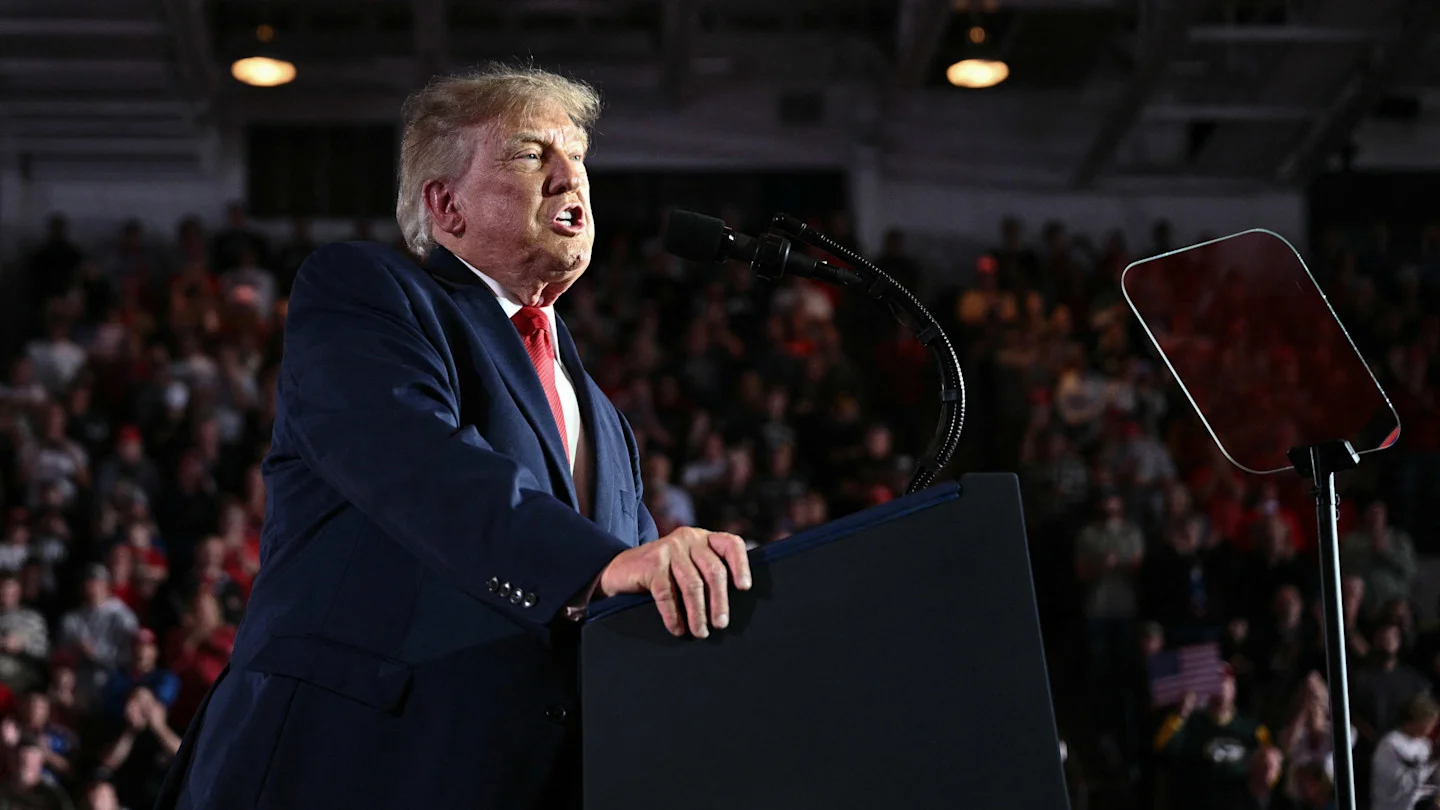
Trump used his appearance at the Reflecting Pool to promote the renovation and reopening of the landmark, defend his administration’s work in Washington and attack Democratic opponents. The event was intended to serve as his closing public pitch before Election Day, but much of the speech centred on the construction project rather than the everyday cost pressures that have dominated voters’ concerns. Associated Press and Reuters accounts said Trump returned repeatedly to the renovation, while making a shorter appeal for Republicans to retain control of Congress.
The setting carried its own political risks. The renovation had run beyond its original timetable and cost substantially more than the initial estimate, and the newly surfaced liner later showed peeling and algae. Trump blamed vandalism for some of the problems, while court filings and reporting on the project raised questions about workmanship. The president’s decision to make the pool a central part of his final appearance kept a disputed Washington project in the news on a day when campaigns were trying to focus attention on national policy and local races.
Trump also tried to persuade voters that falling oil prices and his administration’s economic record should count in Republicans’ favour. Crude prices dropped sharply on Monday as traders reacted to renewed diplomatic activity aimed at ending the US-Israeli war on Iran. The price decline gave the president a fresh talking point, but one day of lower oil prices does not erase the effects of earlier increases on fuel, freight, household budgets and business costs. Voters will judge the economy through their own expenses as well as through headline market movements.
In the closing stretch, Trump repeated familiar claims about border security, taxes and crime and warned that Democrats would move the country in a more radical direction. He also renewed a promise to send $5,000 to every adult if Republicans retained control of both chambers, according to reporting by The Guardian and other outlets. The speech did not provide a detailed funding mechanism, eligibility rules or legislative proposal for such a payment, so the promise should be treated as a campaign pledge rather than an approved benefit.
Republicans have spent the final weeks trying to make tax policy, border enforcement and lower energy prices central to their message. Democrats have emphasised the cost of living and argued that tariffs and the war with Iran have added pressure to household budgets. The dispute is not only about which side has the more persuasive description of the economy; it is also about whether voters feel that their incomes are keeping pace with prices for food, housing, fuel, insurance and other essentials.
The Iran conflict has become an especially difficult issue for the administration. It has disrupted energy flows through the Gulf, pushed up crude prices at points during the conflict and created uncertainty about whether further military action could follow the midterms. Trump has alternated between describing diplomacy as promising and keeping the possibility of renewed strikes open. Regional mediators are still working on proposals, but no final agreement has been announced. That leaves voters weighing both the administration’s stated security goals and the economic costs of a conflict with an uncertain endpoint.
The latest fall in oil prices may offer some relief if it persists, but retail fuel prices do not move in lockstep with futures. Refining costs, distribution, taxes, inventories and local competition affect what drivers pay, while households also face non-energy expenses that crude prices cannot directly offset. Businesses may likewise take time to pass through lower input costs. For that reason, the market move on Monday was a development to watch, not evidence that the cost-of-living issue had been resolved before voting began.
Also read: Oil Prices Drop More Than 1% as US-Iran Talks Continue, Brent Stays Above $110
Economic frustration is not uniform across the country. Local industries, housing costs, employment conditions and exposure to fuel prices vary widely from state to state. That makes the congressional map more complicated than a single national measure of inflation or presidential approval. Candidates in competitive districts have to connect national policies to the concerns of their own voters, while campaigns also depend on turnout among people who may not vote in every midterm election.
One of the final campaign’s most consequential twists came in Michigan, where Representative Haley Stevens endorsed Republican Senate candidate Mike Rogers after losing the Democratic primary to Abdul El-Sayed. The endorsement angered some Democrats and intensified an already difficult contest over the party’s direction. El-Sayed urged supporters to vote despite the split, while his campaign reported raising $2.4 million in a single day, according to Reuters and other coverage.
The episode illustrates how a close election can be shaped by divisions inside a party as well as by the contest between Democrats and Republicans. An endorsement from a defeated primary candidate can attract attention and signal disagreement over policy or strategy, but it does not automatically transfer that candidate’s supporters to the other side. Voters may follow the endorsement, ignore it or use it as a reason to reassess their choices. Campaigns will not know the full effect until votes are counted.
Michigan is one of several states where Senate control could hinge on a narrow result. Republicans entered the campaign with a Senate majority, while Democrats have sought gains in states where polling and forecasts suggested competitive races. Iowa, Kansas, Maine, Ohio, Texas and Alaska also drew attention during the closing stretch, though the conditions and candidates differ in each state. A national message can influence those races, but local issues and candidate-specific strengths still matter.
The House contest presents a different calculation. All 435 seats are up for election, and a relatively small number of competitive districts can determine which party holds the majority. A shift in control would affect committee leadership, legislative scheduling, oversight investigations and the administration’s ability to advance its agenda. Even without a change in party control, a narrow majority can leave congressional leaders vulnerable to defections within their own caucus.
Forecasters and pollsters have pointed to a difficult environment for the president’s party, but polling is not a result and individual races can diverge from national patterns. Turnout, late decisions, ballot rules, candidate quality and local issues can all influence outcomes. In some contests, results may not be clear on election night, especially where mail ballots or close margins require additional counting and verification.
The final campaign also unfolded amid disputes over election administration. The Trump administration asked the Supreme Court to intervene in a fight over roughly 20,000 California mail ballots that federal officials suspect may be associated with noncitizens. Lower courts had rejected requests to set the ballots aside, while California officials argued that the federal list was unreliable and could include eligible citizens. The dispute is separate from the broader campaign message, but it has become part of the national argument over voting rules and the balance of authority between federal and state officials.
Voting procedures are administered through state and local systems, and rules on polling places, identification, mail ballots and counting differ by jurisdiction. USAGov’s election guidance advises voters to confirm their polling place and applicable identification requirements through their state’s election office. The practical task on Election Day is for voters to follow instructions issued by local election officials, while election administrators process ballots under the rules that apply locally. Claims about fraud or eligibility should be assessed against verifiable evidence rather than assumed from a disputed list or a political statement.
The election also includes races below the federal level, where voters will decide contests for governors, state legislatures and local offices. Those outcomes can shape issues that reach people more directly than federal debates, including education, public safety, transport, housing, abortion policy, energy projects and state budgets. The balance of power in Washington will attract most national attention, but state and local results can alter policy for years.
Trump’s final appearance showed how the White House is trying to connect the election to his own record. Democrats are trying to make the vote a judgment on the administration’s handling of prices, tariffs and the war. Republicans are seeking to turn out voters who support the president’s policies and to keep competitive races from becoming referendums on national dissatisfaction. Both strategies depend on how voters interpret their own circumstances, not just on what candidates say in the final hours.
The election’s immediate outcome will determine the balance of Congress, but its consequences will extend into the next two years of policymaking. A House majority can decide which investigations proceed and which bills reach the floor. Senate control affects confirmations and the path for legislation. State-level wins can influence redistricting, election rules and the implementation of national policies. The results will therefore matter beyond the next news cycle, even though a single election cannot resolve every economic or foreign-policy dispute that shaped the campaign.
As polls open on Tuesday, the most important unanswered questions are whether Democrats can translate dissatisfaction into turnout, whether Republicans can persuade voters that their policies are improving economic conditions, and whether closely contested Senate races follow the patterns suggested by pre-election forecasts. The campaign is over; the electorate’s decision is not yet known. Any prediction should remain provisional until election officials report verified results.






Comments (0)
Be the first to comment. Comments are published after moderation.