


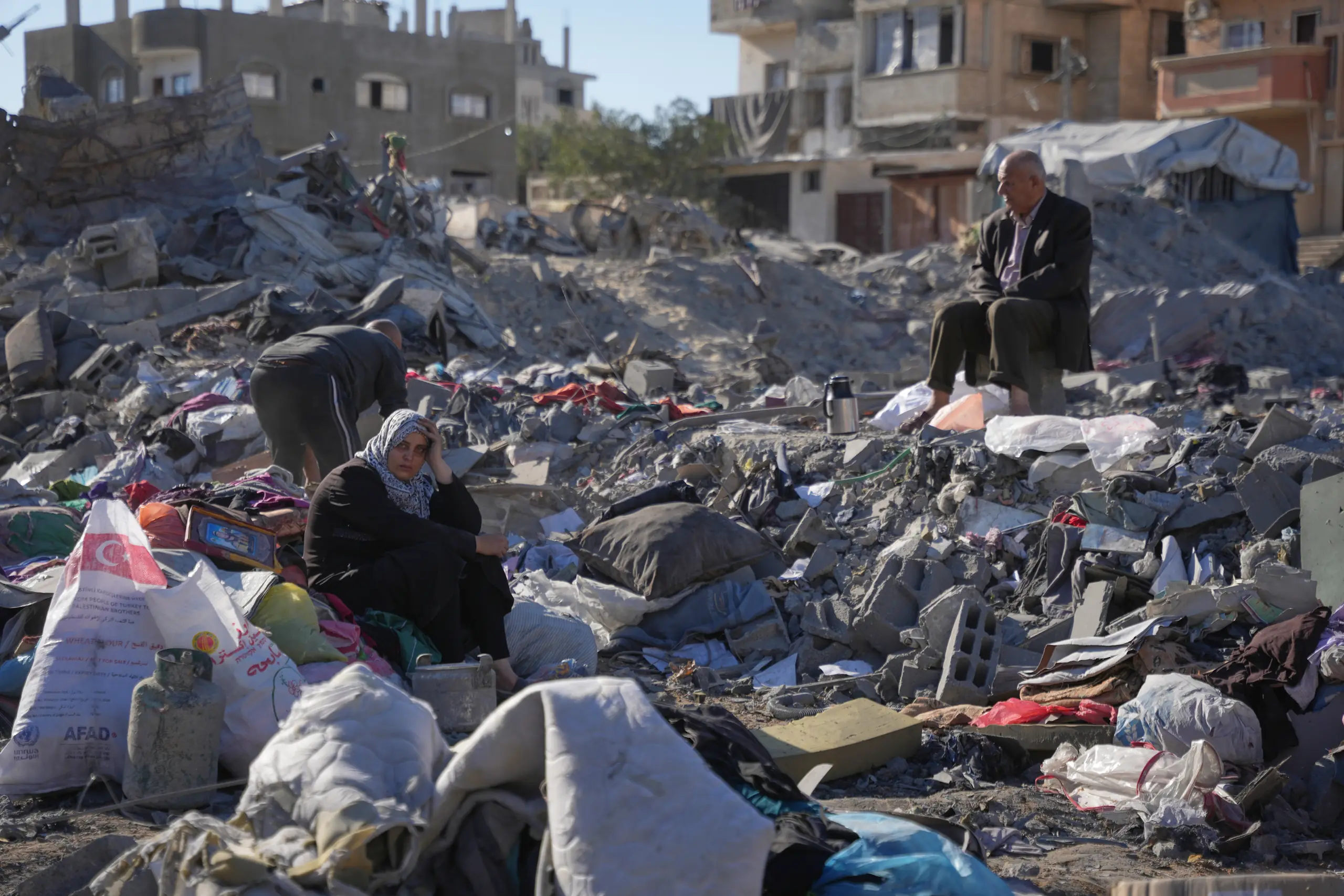
GAZA, November 1, 2026: Israeli strikes killed at least eight Palestinians in two separate attacks in the Gaza Strip on Sunday, including a four-year-old boy in Gaza City and five police officers in Khan Younis, according to hospital staff and Palestinian officials cited by Reuters and The Associated Press. The Israeli military said it had struck militants in Khan Younis and a Hamas militant in northern Gaza, while the available reports did not establish the circumstances of every casualty or provide an independent assessment of the targets.
The deaths underline how violence has continued despite the ceasefire that took effect in October 2025. The truce halted much of the large-scale fighting, but Israeli strikes and other security incidents have persisted as negotiators remain divided over Hamas’s disarmament, an Israeli troop withdrawal and the conditions for rebuilding the devastated territory.
The reports describe two distinct attacks. In Gaza City, medics said three people were killed in an airstrike; AP identified a four-year-old boy among the dead and said a woman was seriously wounded. In western Khan Younis, five people were killed in a separate strike, according to Nasser Hospital and the Hamas-run interior ministry. Reuters reported that the five were police officers. The casualty figures and descriptions are attributed to the local medical facilities and Palestinian authorities that reported them.
Reuters reported that the Israeli military said it had struck several militants in Khan Younis, without giving further details in the statement cited by the agency. AP reported that the military also said it had targeted a Hamas militant in northern Gaza. Neither report provided a full public account of the evidence behind each target, and Reuters said the military had not immediately commented on the Gaza City strike.
That leaves important questions unanswered. The reporting reviewed for this article does not independently establish the intended target in the Gaza City attack, the circumstances in which the child and other victims were killed, or the full extent of damage at either site. Nor does the available material provide a complete account of the military’s operational assessment for the strike in Khan Younis.
Israel says it has increased strikes because Hamas is rebuilding its capabilities and violating the ceasefire. Hamas denies trying to rebuild its arsenal or carry out attacks and accuses Israel of undermining the truce. Those competing claims are central to the parties’ public explanations for continued violence, but neither side’s account alone settles the facts of an individual incident.
Hospital and health-authority figures are often the quickest available information during an attack, particularly when access is limited. They remain important evidence of the human cost, but the circumstances of deaths and the status of alleged targets may require further reporting, documentation and independent verification. The numbers should therefore be attributed to the institutions reporting them rather than presented as a complete independent investigation.
The ceasefire began in October 2025 after two years of devastating war that followed the Hamas-led attack on southern Israel on October 7, 2023. That attack killed about 1,200 people in Israel and led to the abduction of 251 people, according to AP. Israel’s subsequent military campaign has caused extensive destruction in Gaza and a reported Palestinian death toll exceeding 74,000, according to Palestinian authorities cited by Reuters; AP cited a figure above 74,500 in its November 1 report.
Those overall figures are reported by Palestinian authorities and should be understood in that context. AP notes that Gaza’s Health Ministry, which operates under the Hamas-run government, does not distinguish in its totals between civilians and militants. The figures are widely used in reporting on the conflict, but the available reports do not provide a complete independent breakdown of every death by status or circumstance.
The ceasefire was meant to create a path toward reconstruction and a more durable political and security arrangement. Yet the most difficult questions have remained unresolved: whether and how Hamas would disarm, how far and when Israeli forces would withdraw, who would govern Gaza, and what security arrangements would be accepted by the parties. Reuters reported on Sunday that Israeli forces control about two-thirds of the territory and that most of Gaza’s more than two million residents are living in the remaining area, amid ruins, tents and damaged buildings.
When a ceasefire is in place but lethal attacks continue, the term can obscure the reality facing residents. The agreement has reduced the scale of fighting compared with the most intense phases of the war, but the persistence of strikes means civilians still face sudden danger, displacement and uncertainty. The latest deaths add to pressure on mediators to turn the truce into a more reliable arrangement rather than a pause punctuated by recurring violence.
The humanitarian emergency is not limited to immediate casualties. Homes, hospitals, water systems, roads and other essential infrastructure have been damaged across Gaza, while large numbers of people remain displaced. The United Nations Office for the Coordination of Humanitarian Affairs (OCHA), in a report published on October 15, described continuing insecurity, widespread displacement and shortages affecting health, water and sanitation services.
OCHA cited Gaza’s Health Ministry as reporting 57 Palestinians killed and 319 injured between September 29 and October 12, bringing the reported toll since the ceasefire announcement to 1,493 fatalities and 5,299 injuries at that reporting cut-off. The report also warned that shortages of fuel, engine oil, vehicle parts and medicines were threatening essential health and water services. These figures predate Sunday’s attacks and should not be mistaken for a current cumulative total.
The latest news reports give different totals for Palestinian deaths since the ceasefire: Reuters cited at least 1,500, while AP cited more than 1,570, both attributing the figures to Gaza health officials. The reports do not reconcile the difference, so it is more accurate to retain the attribution and note that the figures reflect different published updates than to combine them into a single definitive count.
Humanitarian organisations have also warned that continuing insecurity complicates aid delivery and the recovery of basic services. In its October 12 statement marking a year since the ceasefire announcement, the United Nations in Palestine said Palestinians continued to face attacks and displacement, and that the pattern raised serious concerns under international law. Such concerns are not the same as a judicial finding that a particular strike violated the law; any legal determination depends on evidence about the specific incident, the target, precautions taken and the circumstances at the time.
Also read: SIPRI Yearbook 2026: Crucial Insights into Global Security Trends
The ceasefire’s future depends on more than whether attacks stop on a particular day. The parties remain divided over disarmament, the withdrawal of Israeli forces and the security arrangements that would follow. These are difficult issues because each side views them through the lens of security, political legitimacy and the risk of renewed fighting.
Israel says Hamas must not be able to reconstitute its military capabilities or launch further attacks. Hamas denies the Israeli account of its intentions and says Israeli operations are undermining the agreement. The dispute has made it difficult to move from the initial ceasefire to the next stage of the plan, including reconstruction and a durable governance arrangement.
For civilians, the practical consequences are immediate. Rebuilding homes and public services requires a degree of physical security, predictable access for humanitarian agencies, the entry of materials and equipment, and a credible framework for managing the territory. Repeated strikes can damage those efforts directly and make residents reluctant to return to places where they may be exposed to renewed violence.
The latest attacks also highlight the problem of verification. A ceasefire framework can set out obligations, but confidence depends on clear procedures for investigating alleged violations, communicating findings and holding parties to their commitments. Without reliable public information, each new incident can deepen mistrust and be used by the parties to justify further action.
Also read: Iran and Oman Hold Talks on Strait of Hormuz Transit Arrangements
The immediate questions are whether Israeli authorities will provide additional details about the targets and circumstances of Sunday’s strikes, whether hospitals or investigators will release further information about the victims, and whether the parties or mediators will announce any new steps to stabilise the ceasefire. The reporting available at publication does not establish that the attacks have produced a formal change in the agreement or that a new round of negotiations has been scheduled in response.
Further reporting should distinguish between confirmed facts, military claims and allegations. If the Israeli military releases a fuller account, it will need to be compared with evidence from the sites and the accounts of witnesses and medical staff. If Hamas or other Palestinian authorities publish additional details, those claims should likewise be attributed and checked against independent reporting where possible.
At the diplomatic level, the indicators to watch include progress on the terms for disarmament, the scope and timing of any Israeli withdrawal, humanitarian access and reconstruction arrangements. A reduction in attacks would be significant, but a durable ceasefire would also require mechanisms that reduce the likelihood of renewed violence and allow essential services and civilian life to recover.
Sunday’s deaths do not by themselves establish the failure of the ceasefire, but they show how incomplete its protection remains for people in Gaza. The truce has not stopped near-daily Israeli strikes, according to AP, and the core political and security disputes are still unresolved. Until those questions are addressed and incidents are investigated transparently, the gap between a formal ceasefire and safety on the ground is likely to remain a central concern for residents and humanitarian agencies.


Comments (0)
Be the first to comment. Comments are published after moderation.