


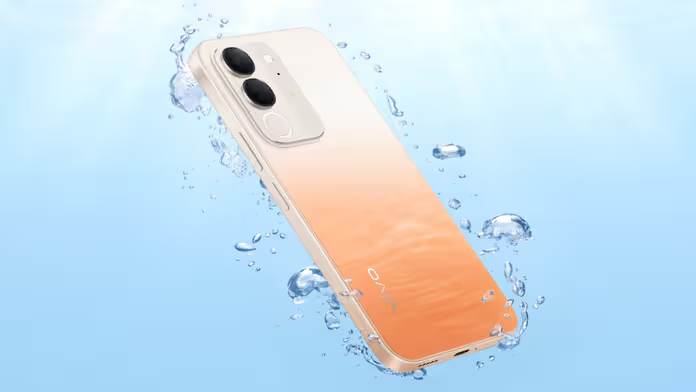
NEW DELHI, November 3, 2026—Reports about the Vivo Y32 5G have raised questions for Indian smartphone buyers, but the most important point is that an India launch, Indian price, and sale date have not been confirmed on Vivo India’s official product pages. Specialist technology reports describe a 5G variant listed in Nepal with a Snapdragon 4 Gen 2 processor and an 8,000mAh battery. However, Vivo’s official regional Y32 pages also show a version with a different processor and 4G-only connectivity.
The difference matters because a shared model name does not guarantee identical hardware in every market. A phone that looks similar and has the same battery capacity may use a different chipset, modem, storage configuration, or network band set. Buyers should not assume that specifications reported for a regional model automatically apply to an Indian retail unit.
As of November 3, the safest conclusion is limited: the Y32 name is attached to an official Vivo product in some markets, and third-party reports describe a separate Y32 5G variant, but an India-specific launch and price remain unverified. Anyone considering an import should check the exact model number, network bands, warranty coverage, and software region before paying.
Reports published on November 2 describe a Vivo Y32 5G with a Qualcomm Snapdragon 4 Gen 2 processor, a 6.87-inch LCD display with HD+ resolution and a refresh rate of up to 120 Hz. The same reports list an 8,000 mAh battery, 44 W wired charging, and up to 6 GB of physical RAM and storage configurations that may include 128 GB or 256 GB. A microSD card slot is also reported, with expandable storage capacity depending on the configuration.
The reported camera arrangement includes a 50-megapixel main rear camera, a secondary sensor, and an 8-megapixel front camera. The device is also described as having IP68 and IP69 dust and water resistance ratings, alongside drop-resistance claims. These specifications come from technology publications covering the reported 5G variant; they should not be treated as confirmed Indian retail specifications until Vivo publishes an India-specific listing or provides a model number that can be checked against official documentation.
Reports about pricing are not fully consistent. One publication reported Nepal prices for three memory and storage variants, while another said Vivo had not yet published pricing or a sale date on its official pages. Because the official regional product pages do not provide a clear, matching confirmation of the separate 5G variant’s price, the reported Nepal prices should be treated as media-reported information rather than a confirmed Indian launch price.
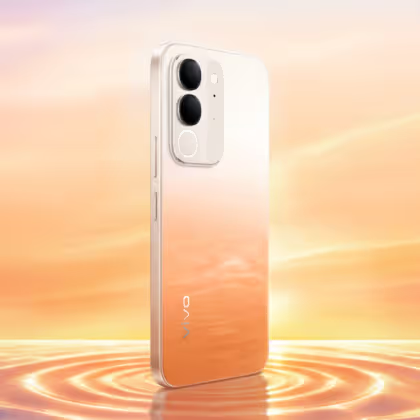
Even if a Nepal listing is genuine, converting its price into rupees does not establish what a phone would cost in India. Import duties, distribution arrangements, taxes, warranty costs, and local retail pricing can change the final amount. A converted price is only a rough comparison, not a promise that the device will be sold in India at the same level.
Vivo’s official product pages in Pakistan and Bangladesh list a Y32 with a T7300 processor and 4G connectivity rather than a Snapdragon 4 Gen 2 5G configuration. The Nepal product page also uses the Y32 name and lists an 8,000 mAh battery, 44 W charging, and IP68/IP69 protection, but the published specification details do not match every element in the third-party reports about the alleged 5G version.
This is not enough on its own to prove that a separate 5G variant does not exist. Manufacturers can sell regional variants, and product pages can be updated at different times. It does mean that a buyer should not rely on a single headline or a retailer’s abbreviated product name. The exact model number and its official specification sheet are the best way to establish which phone is being offered.
Connectivity is especially important. A 5G phone must support compatible frequency bands and network configurations to use the services available in a particular country. A handset sold in another market may lack one or more bands used by Indian operators, even if the device supports 5G elsewhere. A phone advertised as “5G ready” should be checked against the precise model and the operator’s current supported bands.
Warranty is another practical difference. An imported device may not qualify for the same repair service, parts availability, or warranty terms as a phone sold through Vivo India’s authorized channels. A seller’s promise of a warranty is not necessarily the same as manufacturer-backed coverage. Before buying, ask who will repair the device, where service is available, and whether proof of purchase from an authorized channel is required.
What an 8,000 mAh battery does—and does not—tell buyers
A battery rated at 8,000mAh is unusually large for a mainstream smartphone, but capacity alone does not determine real-world battery life. Display brightness, processor efficiency, mobile signal strength, background applications, gaming, video recording, and charging behavior all affect how quickly the battery drains. A large battery can support long endurance, but independent testing is needed to compare it fairly with other phones.
Charging time also depends on more than the wattage printed on a box. The phone must support the advertised charging protocol, the charger must deliver the correct power profile, and the device may reduce charging speed as the battery warms or approaches full charge. Heat management is important with any large battery. Buyers should use compatible charging equipment and follow the manufacturer’s safety instructions rather than assuming that the highest advertised wattage will be maintained throughout a full charge.
The reported 6.87-inch HD+ display is large, which may suit users who watch video, read documents, or prefer larger on-screen controls. Its resolution is lower than that of many more expensive phones, however, so text and fine detail may appear less sharp at close viewing distances. A 120Hz refresh rate can make scrolling feel smoother, but it does not turn an HD+ panel into a higher-resolution screen.
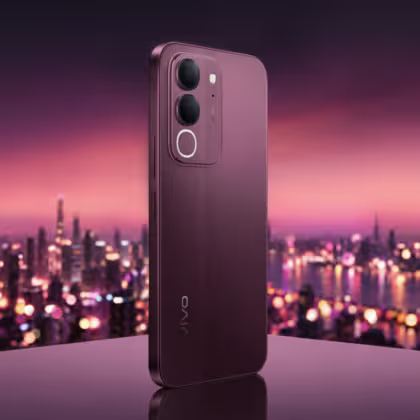
For everyday tasks, the Snapdragon 4 Gen 2 is a budget-oriented 5G platform. Actual performance depends on the phone’s thermal design, software optimization, memory configuration, and background workload. Buyers should not judge performance from a processor name alone. Independent reviews and tests of the exact regional variant are more useful than comparisons based on specifications from a different model.
Also read: How to Extend Smartphone Battery Health: A Practical Guide
What Indian buyers should check before paying
First, look for the exact model number on the retail box and in the phone’s settings. Compare that identifier with an official Vivo product page or support document. If the seller cannot provide a model number or offers only a screenshot from a marketplace listing, pause the purchase until the specifications can be confirmed.
Second, verify the network specifications. Check the supported 4G and 5G bands, dual-SIM behavior, eSIM support if relevant, Wi-Fi, Bluetooth, and NFC availability. Some features can vary by market. A phone imported from Nepal, Pakistan, or Bangladesh may have a different SIM configuration, regional software, pre-installed applications, or network certification.
Third, confirm the total price and warranty in writing. Ask whether the device is an official Indian unit or an import, whether GST documentation is provided, and who handles repairs. A lower purchase price can become less attractive if a screen, charging port, or battery replacement must be arranged outside the authorized network. The same applies to replacement parts and software support.
Fourth, compare the complete package with phones already sold officially in India. Consider the display, performance, camera quality, storage, software-update commitment, weight, charging speed, and service coverage. A very large battery may be valuable to someone who travels frequently, but it may also mean a heavier device. The reported Y32 weighs about 229–230 grams in some regional specifications, which is worth checking in person if one-handed use matters.
Finally, wait for an India-specific announcement if local warranty and network support are priorities. A phone’s presence on an overseas website does not confirm an Indian launch. Until Vivo publishes local pricing and availability, Indian buyers should not treat an estimated currency conversion or a marketplace listing as an official offer.
Also read: Vivo X300 Pro India Launch: Features Redefining Flagship Phones
The Y32 story is a reminder to separate a product name from a verified specification sheet. Reports describe a potentially useful budget 5G device with a large battery, but the regional listings and pricing information do not yet provide a single, unambiguous picture for India. Buyers can avoid an expensive mistake by checking the exact model, network compatibility, warranty, and official availability before placing an order.
Frequently asked questions
Has Vivo confirmed an India launch date for the Y32 5G?
No India launch date or Indian price was confirmed on Vivo India’s official product pages at the time of this report. Buyers should check an India-specific official listing before purchasing.
Why do Vivo Y32 specifications differ between websites?
Regional models can differ, and third-party reports about a separate 5G variant do not match every detail on official Y32 pages in other markets. The exact model number is needed to confirm the hardware.
Should Indian buyers import the Vivo Y32 5G?
Only after verifying the exact model, Indian network-band compatibility, warranty coverage, software region, total landed cost, and return policy. A reported overseas price is not an official Indian price.

Comments (0)
Be the first to comment. Comments are published after moderation.