


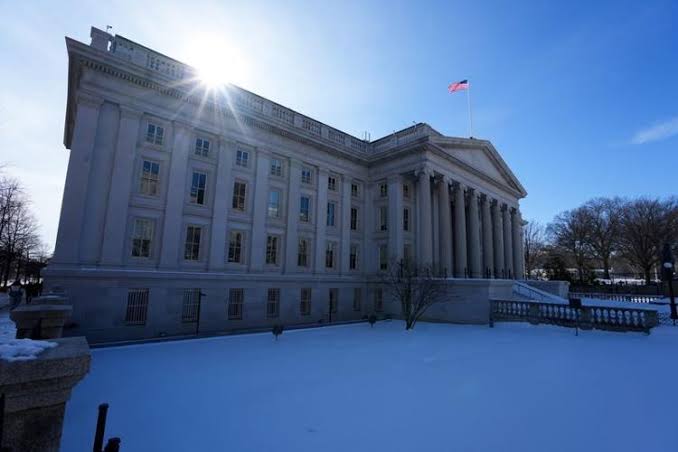
WASHINGTON, November 2, 2026 — The Treasury borrowing estimate for privately held net marketable debt in the final three months of 2026 is $618 billion, $10 billion below the August projection, although the department says underlying funding needs are higher once the government’s larger opening cash balance is accounted for. The department expects to borrow $800 billion in the January–March 2027 quarter and plans to end March with $1 trillion in cash. The figures set the stage for investors to examine the Treasury’s debt-issuance plans at its next quarterly refunding announcement on Wednesday, November 4.
The Treasury’s November 2 statement said it expects to borrow $618 billion in privately held net marketable debt during October–December, assuming an end-of-December cash balance of $850 billion. The estimate is $10 billion below the figure announced in August. Treasury attributed the reduction mainly to a higher-than-assumed cash balance at the start of the quarter, partly offset by lower projected net cash flows.
That distinction matters because the headline estimate does not mean the government’s underlying financing needs have eased by the same amount. Treasury said that, excluding the benefit of the larger opening cash balance, the current-quarter borrowing estimate is $24 billion higher than the August projection. In other words, the government is entering the quarter with more cash already available, but the flow of money expected to come in and go out leaves a larger funding requirement than the headline comparison suggests.
The borrowing estimate covers privately held net marketable debt, a Treasury measure of financing raised from investors outside certain Federal Reserve holdings and related rollover treatment. It is not the same as the federal budget deficit, total gross federal debt or the amount of securities that will mature and be refinanced. Those measures overlap, but each describes a different part of the government’s finances. A quarterly borrowing estimate is also a forecast, not a final tally of how much cash the Treasury will raise by December 31.
The cash balance is central to the calculation. Treasury uses its account balance to manage day-to-day payments and to maintain a buffer against swings in receipts and outlays. A higher opening balance can reduce the amount of new borrowing required during a quarter even when spending and cash-flow projections are less favourable. The reverse can happen when the government starts with less cash than expected: it may need to issue more debt simply to reach the same intended end-of-quarter balance.
The department expects to finish December with $850 billion in cash. That target is an assumption built into the borrowing forecast, not a guarantee that the balance will land exactly at that level. Actual receipts, spending and other cash flows can differ from estimates, forcing the Treasury to adjust its financing needs as the quarter progresses.
The Treasury also reported that it borrowed $742 billion in privately held net marketable debt during July–September and ended September with a cash balance of $984 billion. In August, it had estimated borrowing of $739 billion and assumed an end-of-September balance of $950 billion. The actual quarter therefore ended with more cash than planned, which affected the comparison between the forecast and the final borrowing figure.
For the first three months of 2027, the Treasury projects $800 billion in borrowing, assuming a cash balance of $1 trillion at the end of March. That is a substantial financing requirement, though it should not be read as a prediction that the government will issue $800 billion in one auction or through one type of security. The Treasury raises funds through a schedule of bills, notes and bonds with different maturities, while also managing the refinancing of securities that come due.
Investors will focus on the mix of that issuance as much as on the total. Short-dated Treasury bills can provide flexibility and meet immediate cash needs, but relying heavily on them leaves the government exposed to frequent refinancing as those securities mature. Longer-term notes and bonds lock in financing for more time, but the government may have to offer higher yields to attract buyers, particularly when investors are concerned about inflation, deficits or the supply of new debt.
Reuters reported that market participants are watching for signs of any future change in auction sizes, especially at the longer end of the yield curve. Treasury has shifted its language in recent refunding statements from discussing potential future increases in debt sales to saying it is evaluating possible changes. That wording has encouraged speculation about whether longer-dated auctions could eventually be reduced while issuance of bills or shorter- and intermediate-term notes takes a larger share of financing.
Such a change would be a decision about the maturity profile of borrowing, not a reduction in the government’s total financing requirement by itself. If the Treasury issued fewer 20- or 30-year bonds, it would still have to raise the money elsewhere or change its cash assumptions. The effect on yields would depend on the size of any adjustment, investor demand and conditions in other markets. Analysts have differed over whether the 10-year note would be affected, and no new auction-size decision was announced with the November 2 borrowing estimate.
The next scheduled checkpoint is the Treasury’s quarterly refunding announcement at 8:30 a.m. on Wednesday, November 4. The department is expected to provide more detail about its financing plans, giving investors a clearer view of auction sizes, debt maturities and the role of buybacks. The borrowing estimate issued on Monday sets the overall cash requirement; the refunding statement will help explain how the department intends to raise the money.
Bond yields reflect more than Treasury supply. Inflation expectations, the Federal Reserve’s policy outlook, economic data, energy prices, geopolitical risks and demand for safe assets can all move prices. The Wall Street Journal reported that US Treasury yields were little changed on Monday, with the 10-year yield near 4.9% and the two-year around 4.6% as investors weighed the midterm elections, borrowing plans and economic releases. Those levels were market snapshots, not proof that the borrowing estimate caused a particular move.
The maturity mix nevertheless matters because Treasury securities are benchmarks for a wide range of borrowing costs. Changes in government yields can influence corporate bond pricing, mortgage rates, municipal borrowing and the discount rates used to value future earnings. The transmission is not mechanical: banks, lenders and investors also weigh credit risk, liquidity, market competition and the outlook for inflation. But a sustained increase in government yields can make financing more expensive across parts of the economy.
For households, the impact would generally arrive indirectly. Mortgage rates and some other loan costs often respond to movements in longer-term yields, while savings rates and short-term borrowing are more closely affected by central-bank policy and bank funding conditions. A single quarterly estimate does not determine those rates. The more important question is whether Treasury issuance, inflation and the economic outlook combine to keep yields elevated over time.
Investors will also monitor the Treasury’s buyback programme, which is designed to support market liquidity by repurchasing selected outstanding securities. Treasury has increased the maximum size of some longer-dated buyback operations compared with earlier levels. Buybacks can help dealers manage inventories and can improve liquidity in particular securities, but they do not erase the government’s overall borrowing needs. Their effect depends on which securities are eligible, how much investors offer and the scale of new issuance.
The November estimate arrives amid wider debate about the federal government’s debt burden and the cost of servicing it. Higher interest rates can increase the expense of refinancing maturing securities and of issuing new debt, although the effect on the average interest bill unfolds over time because outstanding securities have different maturities and coupons. The Treasury’s immediate task is to fund government operations reliably while maintaining orderly market functioning; broader fiscal choices about spending, revenue and deficits remain matters for the administration and Congress.
For market participants, the central questions are now practical: whether Wednesday’s statement changes the expected size or composition of auctions; whether Treasury keeps its current cash-balance assumptions; and whether investors continue to absorb new securities without requiring materially higher yields. The $618 billion figure is lower than August’s estimate, but the accompanying cash-flow explanation cautions against interpreting the headline as a clear improvement in the government’s underlying finances.
Also read: RBI Net Bond Sales Hit ₹1 Trillion, Highest in Over a Decade
The Treasury’s Wednesday refunding details should provide the next concrete evidence of how it plans to meet its financing needs. Investors will look for any changes to coupon auction sizes, the balance between bills and longer-term securities, and further guidance on buybacks. Subsequent cash-flow data will show whether the assumptions behind the $618 billion estimate hold. Until those details arrive, the safest reading is that the government has reduced its headline fourth-quarter borrowing forecast because it starts with more cash, even as its estimate of underlying borrowing needs has increased.






Comments (0)
Be the first to comment. Comments are published after moderation.