


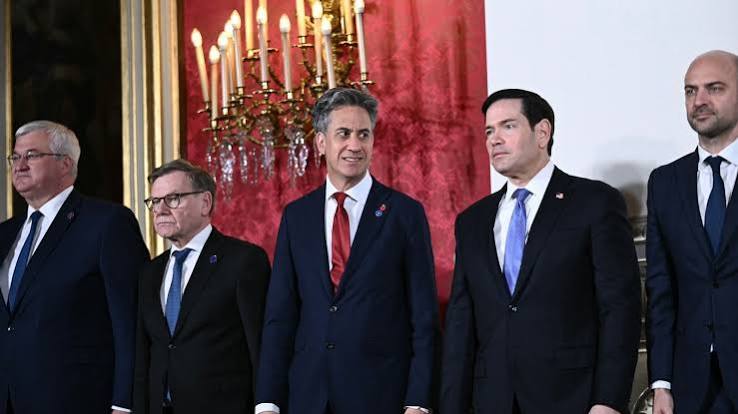
PARIS, November 10, 2026 — Rubio’s Hormuz security appeal received no public commitment from fellow Group of Seven foreign ministers after he urged them to help protect commercial shipping through the Strait of Hormuz. The United States says it will continue defending vessels from Iranian attacks, while several European partners have indicated that minesweepers and other support should be deployed only after the fighting has stopped.
The disagreement emerged at the end of two days of G7 foreign minister talks in Paris, where the Iran war, Ukraine, and the security of energy supplies were all on the agenda. Rubio’s appeal was not rejected in a formal vote, and he said a few countries might still be considering participation. But the meeting produced no public commitment to join the US effort, leaving the central operational question unresolved: whether countries should help protect ships while attacks remain possible or wait until the immediate risk of conflict has receded.
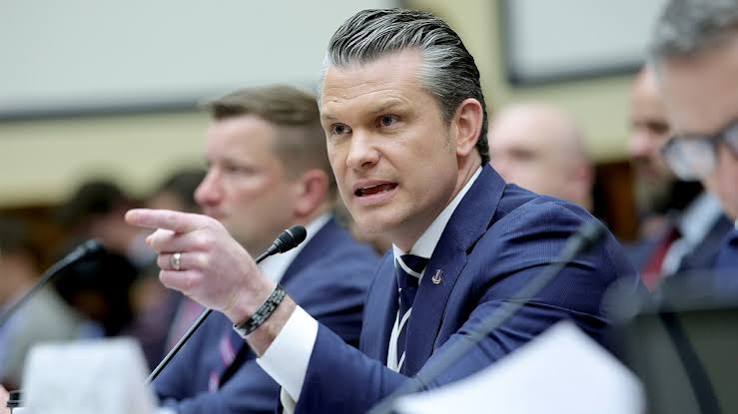
Rubio told reporters that he had raised the issue with his counterparts but had not received an answer. He said the United States would continue to defend shipping through the waterway, where vessels remain exposed to drone attacks. The secretary of state argued that keeping the route open serves the interests of the wider international economy, not only countries that depend directly on Gulf oil and gas. He also said Washington had encouraged partners to take part in protecting global shipping and suggested that a small number might be considering the request.
The distinction between a request and a commitment is important. Rubio did not announce that a G7 naval coalition had been agreed upon, nor did he identify countries that had promised to send ships or specialist teams. The Associated Press reported that France and other US allies had said they would provide minesweepers and other assistance only after hostilities ended. Rubio described the gap as a “Catch-22”: governments want the threat to be reduced before sending forces, while Washington argues that international help is needed to reduce the threat in the first place.
The G7 includes the United States, Britain, Canada, France, Germany, Italy, and Japan, with the European Union also represented. The Paris gathering was a foreign-ministers’ meeting under France’s 2026 presidency, not a summit of heads of government. Its agenda covered several crises, including support for Ukraine and the protection of strategic supply routes. France had identified the security and diversification of energy supplies as a priority before the meeting began. That agenda created an opportunity for ministers to discuss Hormuz, but it did not oblige them to accept Washington’s preferred timetable for action.
French Foreign Minister Jean-Noël Barrot’s official readout of a meeting with Egypt’s foreign minister on November 10 said the two sides discussed regional crises and the risk of escalation in the Middle East and stressed the urgency of securing strategic supply routes. The statement did not announce a new naval deployment or a French commitment to join an operation while fighting continues. It reflects concern about the security of trade routes while leaving the timing and form of any military contribution open.
The disagreement is not simply about whether freedom of navigation matters. The G7 governments have repeatedly supported safe passage through international waterways. The practical dispute concerns the conditions under which a mission would operate. A force sent while Iranian attacks continue could face drones, missiles, mines, and threats from small craft. A force deployed only after a ceasefire may have a narrower task, but it would not protect ships during the period when the risk is highest.
Mine-clearing is a specialist task that requires trained crews, equipment, and time. Escorting merchant ships also demands surveillance, air defense, communications, rules for responding to an attack, and coordination with the commercial operators using the route. Warships cannot make a waterway safe simply by appearing in it. They need intelligence about possible threats, a clear command structure, and a political agreement about what they are authorized to do if a vessel is targeted. A mission that lacks those elements could expose personnel and commercial ships without providing the assurance that insurers and shipowners need.
For European governments, the risk of becoming a direct participant in the Iran conflict is a separate concern. A defensive escort operation could be interpreted by Tehran as support for the US military campaign, particularly if it takes place while American forces are enforcing a naval blockade. Governments that oppose Iran’s attacks on commercial vessels may still be reluctant to join a mission that could draw them into exchanges of fire. Their stated preference for action after hostilities end reflects that calculation, rather than a lack of interest in reopening the route.
Washington sees the problem differently. The US Navy is already involved in protecting shipping and enforcing pressure on Iran, and Rubio argued that other countries benefit from the route even if their own forces are not leading the operation. He said the United States does not obtain oil through the strait, framing the request as a matter of shared international responsibility. That was Rubio’s argument to allies, not a full description of the complex energy trade that moves through the Gulf and onward to global markets.
The absence of an immediate answer does not mean that every G7 government has permanently refused to contribute. Rubio said a couple of countries were thinking about the request. Governments may also be prepared to provide different forms of support, such as surveillance, logistics, intelligence, mine-countermeasure equipment, or assistance to merchant operators, rather than committing a combat vessel. The AP report did not identify a country that had made a firm offer during the meeting.
Rubio’s appeal came as the Trump administration was also explaining why it believes further major military strikes against Iran may not be necessary. In a separate interview with reporters in Paris, he said sanctions and the naval blockade were inflicting growing economic damage and argued that the United States could achieve its objectives without returning to large-scale combat operations. He rejected the suggestion that holding off on new strikes would amount to a stalemate.
Reuters reported that President Donald Trump had paused plans for further attacks after appeals from regional governments, including Qatar. The administration’s immediate approach is therefore to maintain economic and maritime pressure while keeping the possibility of military action open. Rubio’s comments do not amount to a declaration that the conflict is over, and they do not establish that Iran has agreed to reopen the waterway or stop attacks on vessels.
The latest statements from Tehran sharpened that uncertainty. Iran’s top security official, Mohsen Rezaei, told Al-Mayadeen on Tuesday that no negotiations with the United States were under way. Reuters reported that Rezaei said Tehran was waiting for a clear and explicit US response to seven conditions set out in a June interim agreement before the Strait of Hormuz could reopen and talks resume.
Qatar’s foreign ministry said its prime minister and foreign minister joined a Paris meeting with Saudi Arabia and the E4—France, Germany, Italy, and the United Kingdom—to discuss de-escalation, maritime navigation, and a framework for a comprehensive agreement. The statement described the issues discussed but did not announce a breakthrough or confirm that direct US-Iran talks had restarted.
A naval blockade can restrict Iran’s trade without guaranteeing that commercial shipping elsewhere in the Gulf is safe. Sanctions may push Tehran towards talks, but they can also raise the risk of retaliation if no diplomatic exit is visible. The White House has not announced a settlement or a timetable for lifting the blockade.
Reuters also reported that advisers inside the Trump administration differed over the next step. Some favor continuing economic pressure, while Vice President JD Vance is said to prefer reaching a deal. The White House did not respond to a request for comment. These reported differences do not establish a formal policy split, but they underline that Washington is still weighing how to convert military and economic leverage into an agreement that would reduce the danger to shipping.
The Strait of Hormuz is a narrow passage between Iran and Oman that connects the Persian Gulf with the Gulf of Oman and the Arabian Sea. The International Energy Agency says an average of about 20 million barrels a day of crude oil and petroleum products passed through it in 2025, equivalent to around a quarter of the world’s seaborne oil trade. About 80% of those oil flows were destined for Asia. The same route carried nearly all of Qatar’s liquefied natural gas exports and most of the UAE’s LNG shipments.
Those figures describe the trade before the full effects of the current conflict and should not be mistaken for the volume moving through the strait today. The IEA said in March that export volumes of crude and refined products had fallen to less than 10% of pre-conflict levels. The agency also warned that alternative routes are limited. Saudi Arabia and the United Arab Emirates have pipelines that can bypass part of the route, but those systems cannot replace the full volume normally carried by tankers.
For Asian importers, the disruption is not confined to the price of crude. The Gulf is a major source of liquefied natural gas, refined fuels, and feedstocks used by industry. A prolonged interruption can raise freight and insurance costs, complicate delivery schedules, and put pressure on fuel and fertilizer supply chains. The effects can reach power generation, transport, chemicals, manufacturing, and agriculture, even in countries that do not import every product directly from the Gulf.
India has a particular interest in the route because it is a major importer of crude oil and a large buyer of Gulf energy. The IEA’s 2025 data show that China and India together received 44% of crude exports moving through Hormuz. A sustained disruption can therefore affect India through higher import costs, shipping premiums and uncertainty over the timing of cargoes. The scale of the effect depends on the mix of suppliers, inventories, alternative purchases and the duration of the disruption; it should not be reduced to a simple forecast for the price of petrol or diesel.
Higher energy costs can also pass into food and industrial prices. Natural gas is a key input for fertiliser production, while diesel and other fuels affect freight, farm machinery and the movement of goods. If shipping remains restricted, importers may need to source cargoes from farther away or pay more to secure vessels and insurance. Those costs can be absorbed by companies for a time, passed on to consumers or shared between suppliers and buyers through contract changes.
Even if hostilities were to stop, reopening the route would not be an instant process. Shipowners would need confidence that mines had been located or cleared, that vessels could transit without being targeted and that a renewed escalation would not strand crews or cargoes. Insurers would have to assess the level of risk, while ports and energy companies would need to coordinate schedules and restart interrupted operations. A ceasefire could create the conditions for a mission, but it would not by itself restore normal commercial traffic.
Any multinational mission would need a legal mandate, command structure, intelligence-sharing rules and clear authority to respond if a ship is attacked. Earlier G7 statements on freedom of navigation provide political backing, but they do not substitute for an operational plan.
The distinction between a mission during and after hostilities is therefore central to the current debate. Washington wants partners to help reduce the danger while the conflict is active. Several allies want the danger to fall before they commit forces. Both positions carry costs: waiting leaves commercial traffic exposed, while acting during the conflict could widen the number of countries drawn into military confrontation. The Paris meeting did not resolve that trade-off.
The next indications will come from any public commitments made by individual governments, the progress of diplomatic contacts with Iran and the level of commercial traffic through the waterway. A further attack on a tanker or a new mining incident could increase pressure for escorts. A negotiated pause could instead make it easier for countries that have so far held back to offer mine-clearing teams, surveillance or other defensive assistance.
For now, Rubio’s appeal has exposed a gap between the United States’ immediate security priorities and the conditions its partners say they need before joining a mission. The G7 has not announced a collective deployment, and the US says it will continue protecting shipping while using sanctions and the blockade to pressure Iran. With a large share of Asia’s energy trade normally passing through Hormuz, the outcome will matter well beyond the Gulf. The immediate question is not whether governments support safe navigation in principle, but whether they can agree on a plan that protects ships without widening the war.


Comments (0)
Be the first to comment. Comments are published after moderation.